
Key Takeaways
Convergence toward integrated platforms: Stocks, crypto, and prediction markets were once separate. The momentum toward a single platform is accelerating. Robinhood proved the model with numbers; Polymarket and Kalshi are heading to the same destination.
Collateral utilization as the core competitive edge in prediction markets: In prediction markets, collateral is locked until an outcome is resolved. Polymarket’s introduction of perpetual futures trading is likely a strategy to convert idle assets into yield.
Traditional finance is converging in the same direction: The new generation grew up accessing multiple asset classes simultaneously. Demand for integrated platforms will only grow as generations turn, and major financial institutions will absorb crypto spot trading and prediction markets in step with an opening regulatory environment.

On April 21, 2026, Polymarket and Kalshi, the two dominant prediction market platforms, announced perpetual futures trading on the same day. Expected instruments span cryptocurrencies including Bitcoin, commodities such as gold, and equities including Nvidia. Both platforms plan to launch pending regulatory approval.
Why Now
This can be understood through the “Robinhood model.” The trend of converging previously separate asset classes onto a single platform was already underway; the Polymarket and Kalshi announcements are a continuation.
Robinhood started as a stock trading app. It added crypto in 2018 and prediction markets in 2025, pioneering a model that brings fragmented trading markets under one roof.
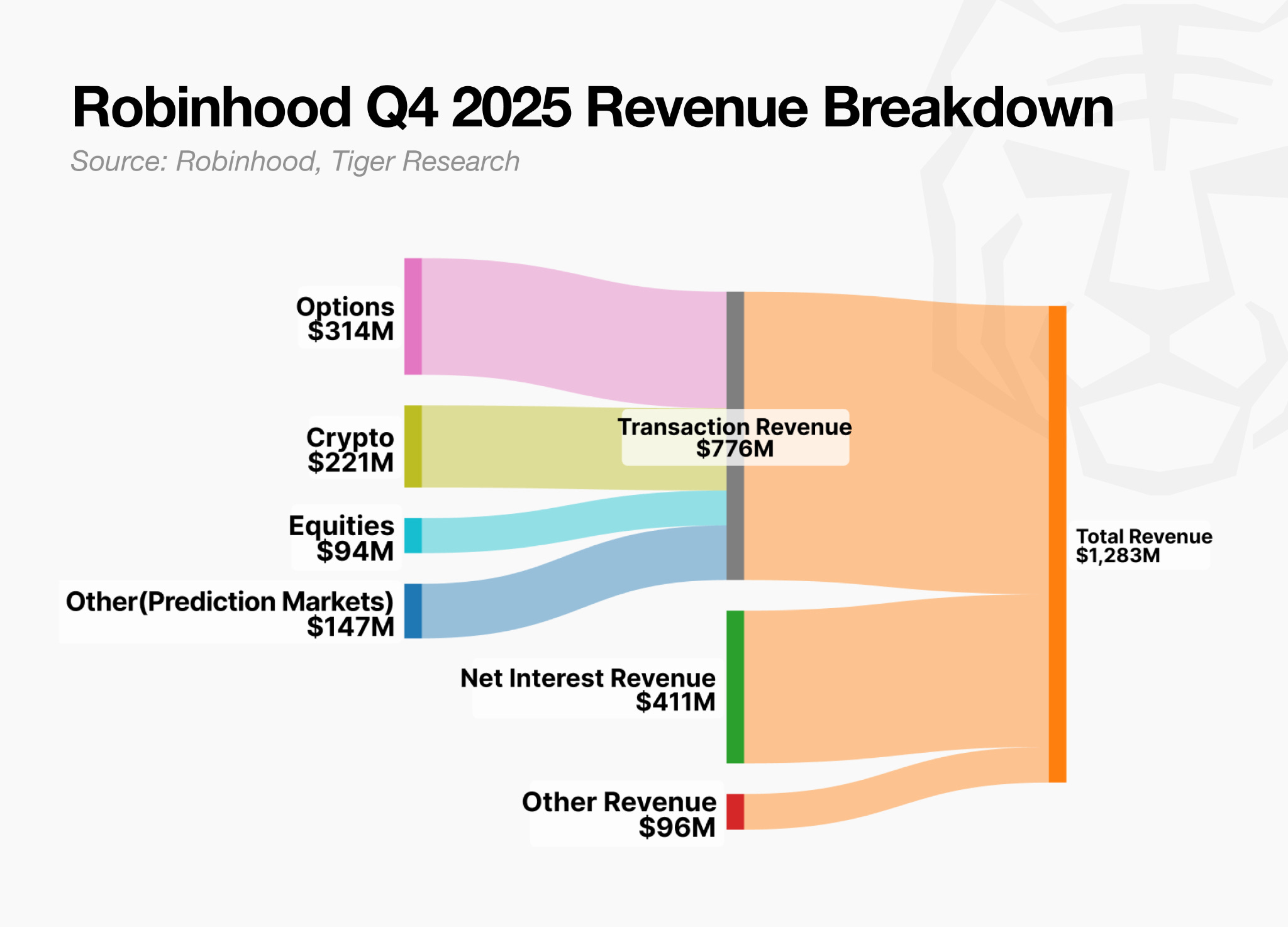
The model has been validated by the numbers. Following its crypto expansion, crypto transaction revenue became Robinhood’s single largest revenue source in Q4 2024. Crypto revenue then declined 38% year-over-year in Q4 2025. Yet total revenue held steady, with options, equities, and prediction markets filling the gap. The structure of resilience through diversification was complete.
Polymarket and Kalshi are approaching from the other direction, toward the same destination. They began in prediction markets and added futures trading. The starting point differs; the endpoint does not. With the Robinhood model validated, traditional finance is likely examining the same trajectory.
Simple Analogy
The smartphone absorbed cameras, MP3 players, and navigation into one device. The era of carrying each separately ended. The same shift is now happening in finance.
Brokerage accounts, crypto exchanges, and prediction markets are merging into a single platform. Robinhood began as a stock app and layered in crypto and prediction markets. Polymarket started in prediction markets and is adding crypto perpetuals. The starting point differs; the direction is the same.
Generalizing the Robinhood Model
This trend will accelerate as generations turn. The new generation grew up with simultaneous access to stocks, crypto, and prediction markets from the start. Just as smartphone users would not accept separate devices for a camera, MP3, and maps, this generation finds the idea of separate apps for each asset class foreign from the outset. Demand for integrated platforms that handle all assets within a familiar interface will grow naturally with each generational shift.
This is the generalization of the Robinhood model.
Polymarket and Kalshi are particularly well-positioned for this model. Because prediction markets lock up collateral until a result is reached, how a platform utilizes idle assets becomes a key competitive differentiator.
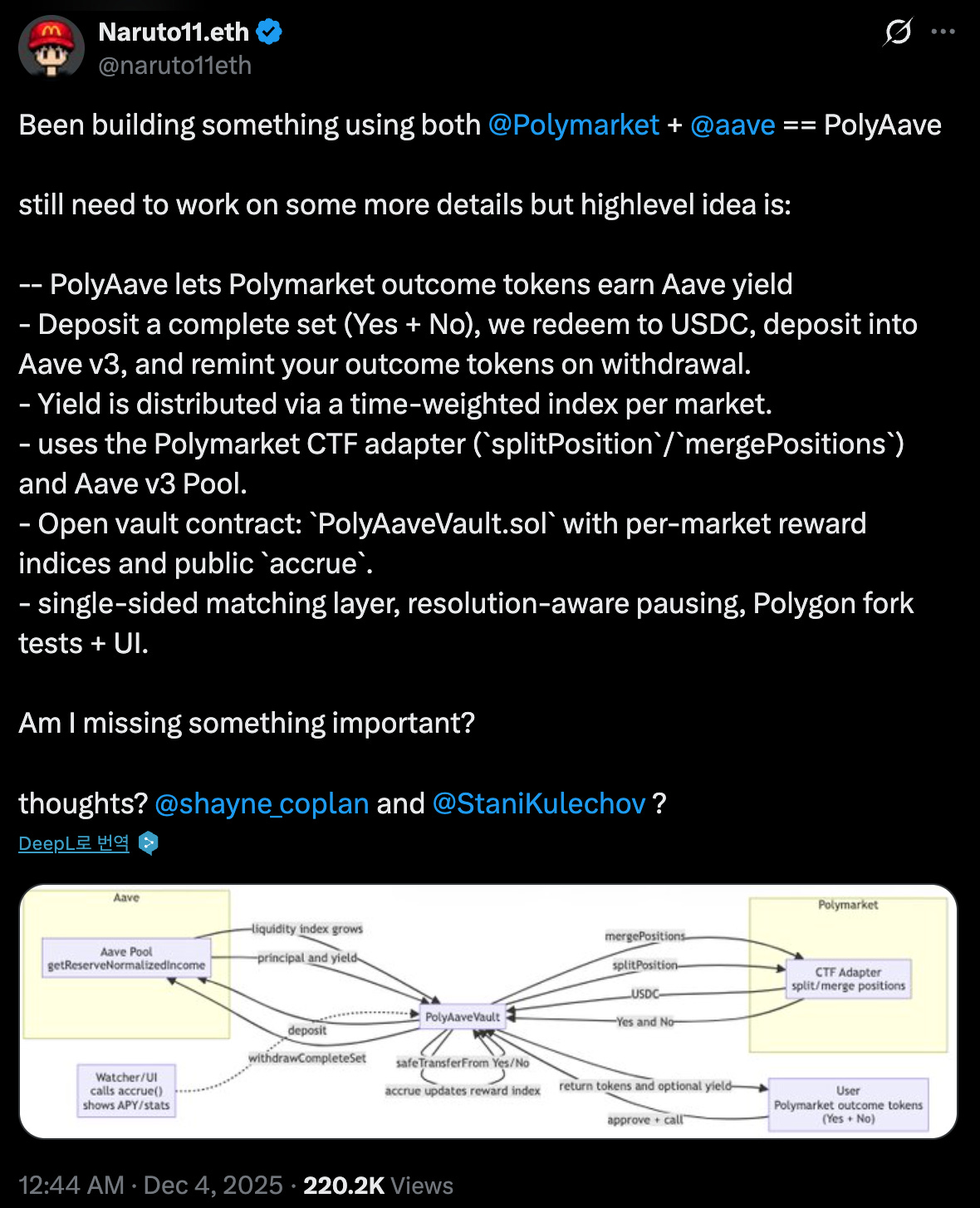
This idea is not new. In December 2025, a developer proposed PolyAave, a concept for depositing Polymarket outcome tokens into an Aave liquidity pool to earn interest. It was an experiment in converting prediction market collateral into DeFi yield. Polymarket’s perpetual futures launch is likely an extension of the same logic. The strategy of not leaving locked capital idle is sound.
Polymarket and Kalshi have moved first, but traditional finance faces the same pressure. Major financial institutions will directly support crypto spot trading and sequentially absorb new asset classes such as prediction markets, paced by how quickly the regulatory environment opens.
Thanks to David for the insight on prediction market collateral utilization.
Disclaimer
This report has been prepared based on materials believed to be reliable. However, we do not expressly or impliedly warrant the accuracy, completeness, and suitability of the information. We disclaim any liability for any losses arising from the use of this report or its contents. The conclusions and recommendations in this report are based on information available at the time of preparation and are subject to change without notice. All projects, estimates, forecasts, objectives, opinions, and views expressed in this report are subject to change without notice and may differ from or be contrary to the opinions of others or other organizations.
This document is for informational purposes only and should not be considered legal, business, investment, or tax advice. Any references to securities or digital assets are for illustrative purposes only and do not constitute an investment recommendation or an offer to provide investment advisory services. This material is not directed at investors or potential investors.
Terms of Usage
Tiger Research allows the fair use of its reports. ‘Fair use’ is a principle that broadly permits the use of specific content for public interest purposes, as long as it doesn’t harm the commercial value of the material. If the use aligns with the purpose of fair use, the reports can be utilized without prior permission. However, when citing Tiger Research’s reports, it is mandatory to 1) clearly state ‘Tiger Research’ as the source, 2) include the Tiger Research logo. If the material is to be restructured and published, separate negotiations are required. Unauthorized use of the reports may result in legal action.