

Is there anything AI cannot do? Step one foot outside a closed system, and it breaks down surprisingly fast. IoTeX set out to solve exactly that weakness, and has begun its transition into an AI platform.
Key Takeaways
AI now performs across most fields, but fails the moment it relies on fragmented, unverifiable external data.
IoTeX has spent eight years building the unified infrastructure to close that gap, transitioning into a platform that supplies real-world data at scale through a three-layer stack of ioID, Quicksilver, and Realms.
Trio is the first commercial product built on that stack, converting infrastructure into direct SaaS revenue through enterprise subscriptions.
The 2026 investment thesis hinges entirely on execution: whether Trio can secure enterprise contracts and whether the Real-World AI Foundry can demonstrate production-grade model performance.
1. AI’s Real Problem: Not Intelligence, but Trustworthy Data
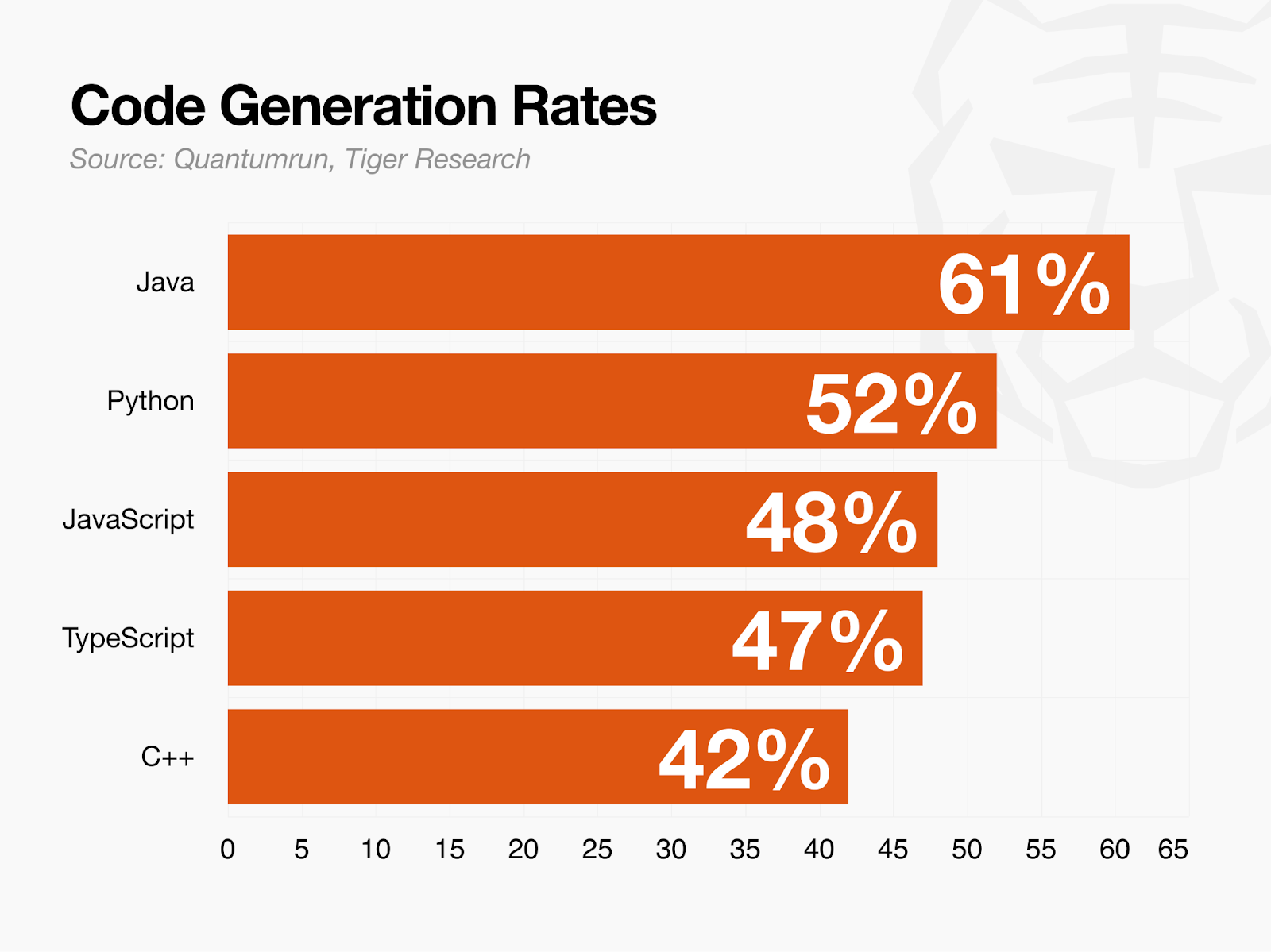
In 2025, AI has exceeded expectations across nearly every field.
OpenAI’s reasoning model achieved gold-medal-level scores at the International Mathematical Olympiad (IMO). GitHub Copilot now generates an average of 46% of developer code directly. AI agents independently handle email management, scheduling, and workflow automation.
“What can AI do?” is no longer the right question.
Inside a closed system, AI is already smart enough. Siemens, GE, and similar firms already run full sensor-to-model pipelines in-house.
The problem starts the moment AI crosses that boundary.
Consider autonomous vehicles. Onboard sensors alone can enable self-driving. But a precise system requires external data including traffic signals, pedestrian detection sensors, and weather stations. Only when thousands of such sources connect in real time does a truly reliable AV system become possible. Yet these sources are operated by different agencies, use inconsistent formats, and share no common standard for verifying data origin.
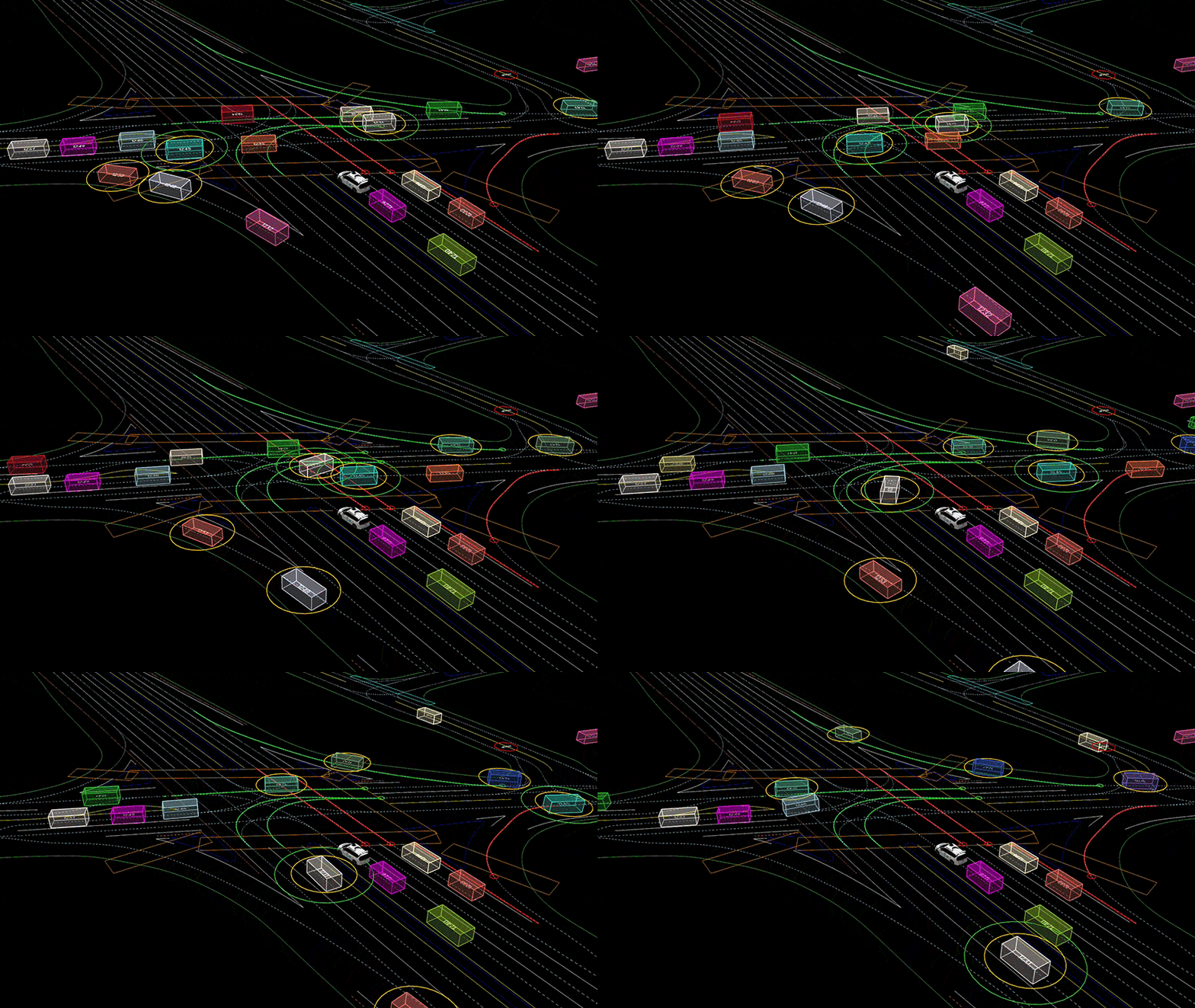
Companies like Waymo and Cruise have already taken on this challenge, building systems that aggregate diverse external sensor data at scale. But their approaches rely on proprietary stacks.
Sharing data with other AV operators or city infrastructure requires additional integration work. Even on the same road, systems remain incompatible.
No matter how capable the AI, fragmented data undermines accurate decision-making.
What’s needed is integrated infrastructure. Every device gets a verifiable identity. Scattered data is aggregated and delivered in AI-ready form, then organized by domain. This is precisely what IoTeX has built.
2. IoTeX: 8 Years of Infra, Now an AI Company
IoTeX spotted this problem in 2017.
During the ICO boom, most projects chased token sales. Connecting physical devices to blockchain was a fringe idea. Before the term ‘DePIN’ even existed, IoTeX began building on one conviction: physical devices would become core blockchain participants. The term “DePIN” did not emerge until late 2022, five years later.
After eight years of sustained infrastructure development, IoTeX has completed a full-stack DePIN platform.
It combines a high-performance L1 blockchain, a device identity protocol, off-chain data verification, and hardware deployments that prove the pipeline works in the real world.
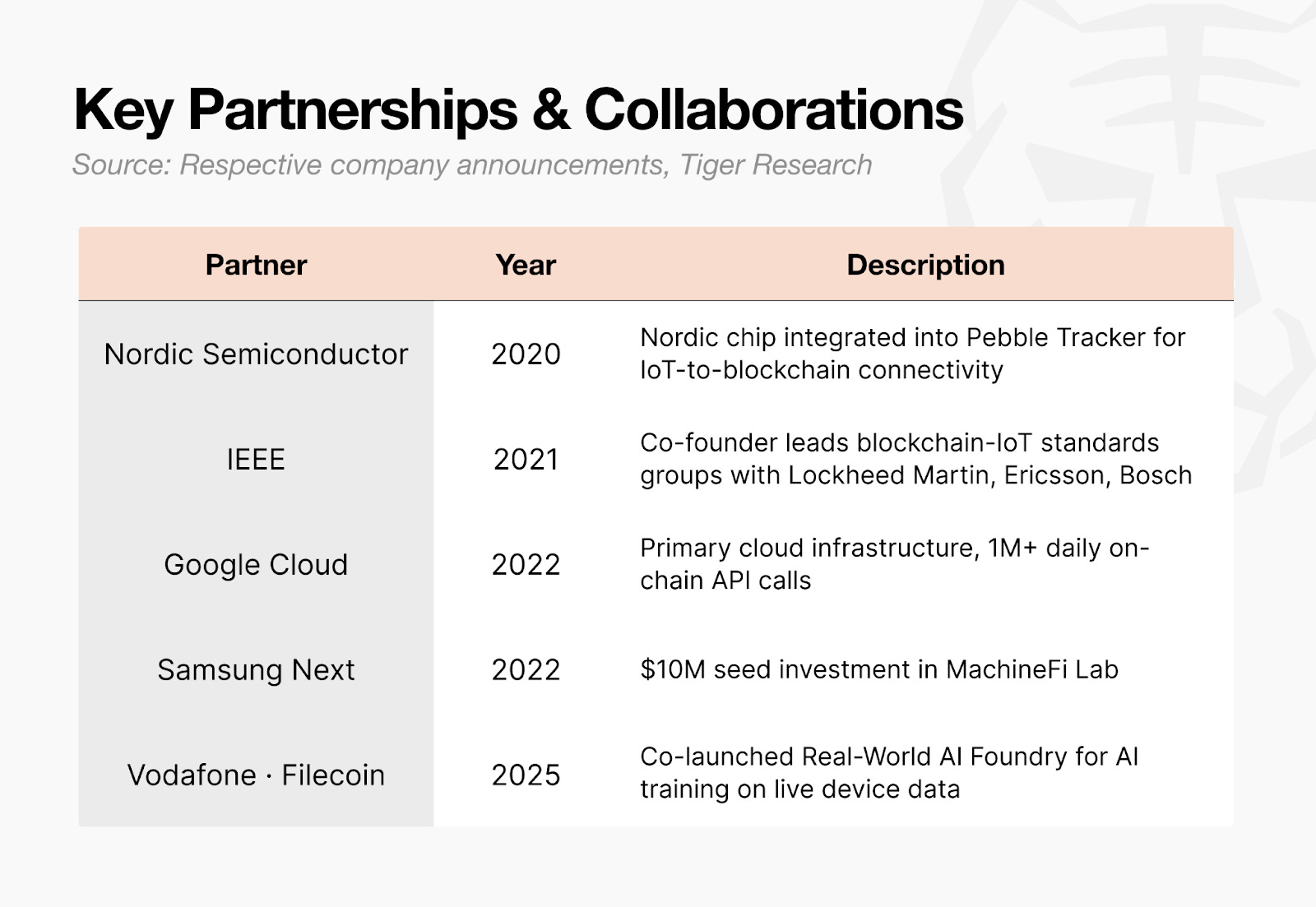
In the process, IoTeX established global partnerships with Google Cloud, Samsung Next, and Nordic Semiconductor. IoTeX also led a blockchain-IoT standards working group at IEEE, building broader industry credibility. By the end of this period, registered smart devices reached approximately 960,000 and connected DePIN projects exceeded 400.
In 2025, IoTeX officially declared its expansion into a Real-World AI platform. The goal is clear: transform eight years of accumulated device networks and data pipelines into a platform that AI can consume in real time.
3. From Data Collection to AI Inference
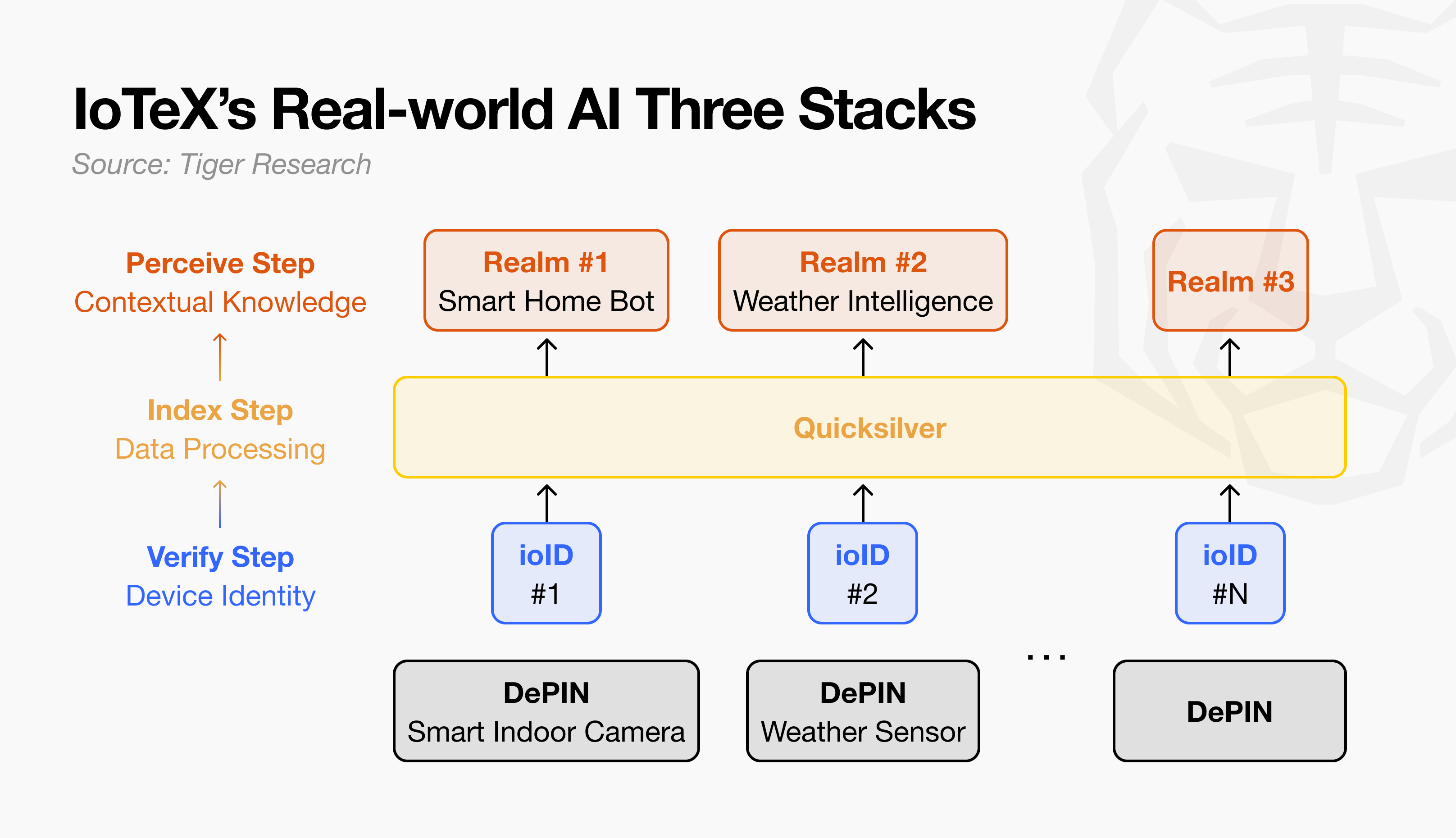
IoTeX’s AI tech stack consists of three layers.
ioID (Verify Step: Device Identity Layer) issues blockchain-based digital IDs to physical devices like sensors and robots. Trust foundation for data provenance and integrity.
Quicksilver (Index Step: Data Processing Layer) aggregates sensor data from hundreds of networks, processes it into AI-readable formats, and delivers it.
Realms (Perceive Step: Contextual Knowledge Layer) layers domain-specific knowledge onto processed data so AI can reason beyond raw numbers.
ioID secures trust. Quicksilver delivers data. Realms provide context. Operating in sequence, these three layers convert raw physical-world sensor signals into actionable AI intelligence.
3.1. ioID: Giving Every Machine and Agent a Verified Identity
For AI to use real-world data, one problem must be solved first. Does this data actually come from the claimed device, and was it tampered with in transit? Data without a verifiable source is worthless to AI, regardless of volume.
The problem intensifies as billions of IoT devices generate data autonomously and AI agents make decisions and execute transactions based on that data. A single manipulated sensor reading can trigger a wrong AI judgment, which then drives real transactions and actions. Without provable identity for each device and agent, the trust foundation of the entire system collapses.
ioID is a decentralized device identity protocol that solves this. It assigns unique identities not only to physical devices such as sensors and robots, but also to AI agents themselves. Every data transmission carries the identity of its source. Without that identity, data is nothing more than numbers of unknown origin. With it, every byte becomes cryptographically traceable.
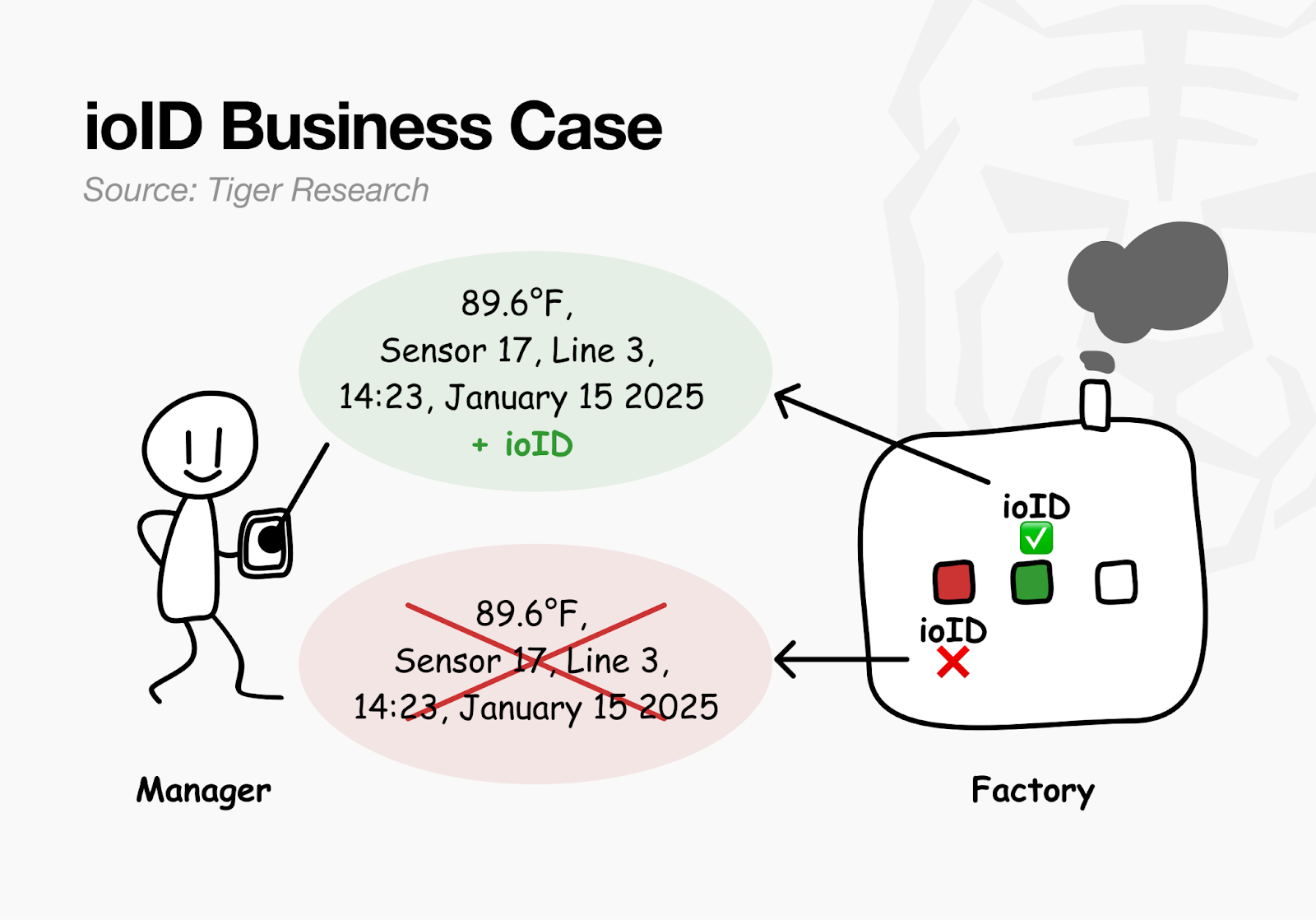
Consider a factory temperature sensor reading 89.6°F. Under ioID, the data includes metadata such as Sensor 17, Line 3, 14:23, January 15 2025. If an unregistered device spoofs a sensor at the same location, data without ioID is rejected as untrusted by the network.
ioID is not simply a labeling system. It is built on the W3C Decentralized Identifier standard. Each registered device is linked to a programmable smart wallet, which the device uses to sign its data and issue verifiable credentials. In effect, the device cryptographically proves it produced the data.
ioID does more than confirm data origin. A device with an identity can also be granted permissions to act. A warehouse sensor, for instance, can automatically trigger a cooling system when temperature thresholds are exceeded. AI agents can receive ioID as well, enabling them to assess conditions and execute responses autonomously, functioning as a kind of digital site manager.
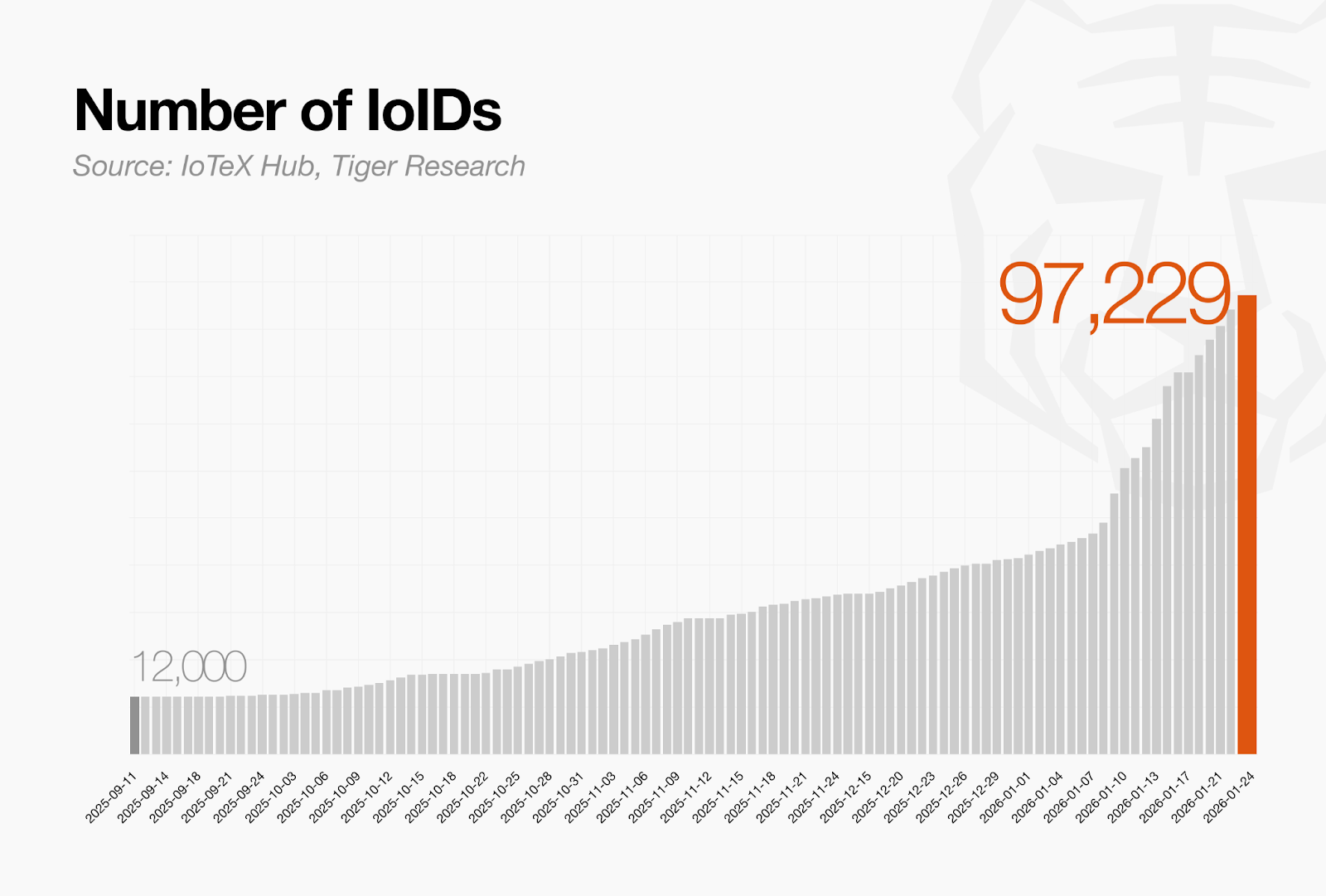
Registered ioID instances on the IoTeX network now stand at approximately 97,000. As of August 2025, the figure was around 12,000, meaning nearly eightfold growth in under six months. A signal of accelerating demand from both device manufacturers and AI agent developers building on the network.
3.2. Quicksilver: The Unified Data and Inference Pipeline for Real-World AI Agents
Verified device identity alone does not mean AI can understand the real world.
Suppose an AI agent is asked, “Good afternoon for outdoor activities near Central Park?” It needs rainfall data from weather stations, PM2.5 from air quality sensors, and more. The problem is format fragmentation. Nubila stations send JSON (humidity, wind speed). Air quality sensors log CSV. The NWS API returns XML forecasts.
Having AI developers connect each of these networks manually is costly and inefficient. That is why Quicksilver was built. Launched in early 2025, this open-source framework unifies fragmented DePIN networks into a single pipeline, converting raw real-world data into structured context that AI agents can perceive, reason over, and act on.
Data Collection & Integration: Aggregates data from hundreds of DePIN networks and Web2 APIs into one access point. AI developers connect through a single API instead of building per-network integrations.
Standardization & Indexing: Converts JSON, CSV, XML, and other formats into one structured format AI models can process directly. Rainfall, PM2.5, and temperature forecasts all arrive in a unified schema.
Cryptographic Verification: Quicksilver nodes use ZK Proofs to confirm data integrity through the processing pipeline. Where ioID proves which device sent the data, this step proves the data reached AI without tampering.
Quicksilver’s role does not end at data transformation. Once data has been collected, standardized, and verified in one place, it becomes a form of validated data marketplace. When micropayment protocols such as x402 are integrated, AI agents can exchange data directly with automated settlement built in. This positions Quicksilver as a potential shared infrastructure layer for the agent economy.
Quicksilver alpha daily requests grew from around 200 to a peak of 2,000. Even at this early stage, daily usage has stabilized at roughly 400 requests on average over the past month, a signal that real-time data demand from AI agents is real.
3.3. Realms: Teaching AI the “Why” with Industry Knowledge
Collecting and connecting data is not enough. The same 90°F reading means entirely different things depending on the domain. In agriculture, it could signal crop stress. In manufacturing, it might be normal for the season, or an early indicator of equipment degradation.
For AI to understand “why,” it needs industry-specific context.
Realms is a domain-specific knowledge base that accumulates this context. Each domain gets its own Realm, with no cap on the number. Three types of data layer together within each Realm.
Real-time physical data: Raw sensor and device output such as temperature, humidity, and traffic flow.
Expert interpretation and tagging: Domain experts review raw data and label whether readings are normal or anomalous.
Private data: Voluntarily contributed by individuals, such as electricity bills, vehicle maintenance logs, and medical records.
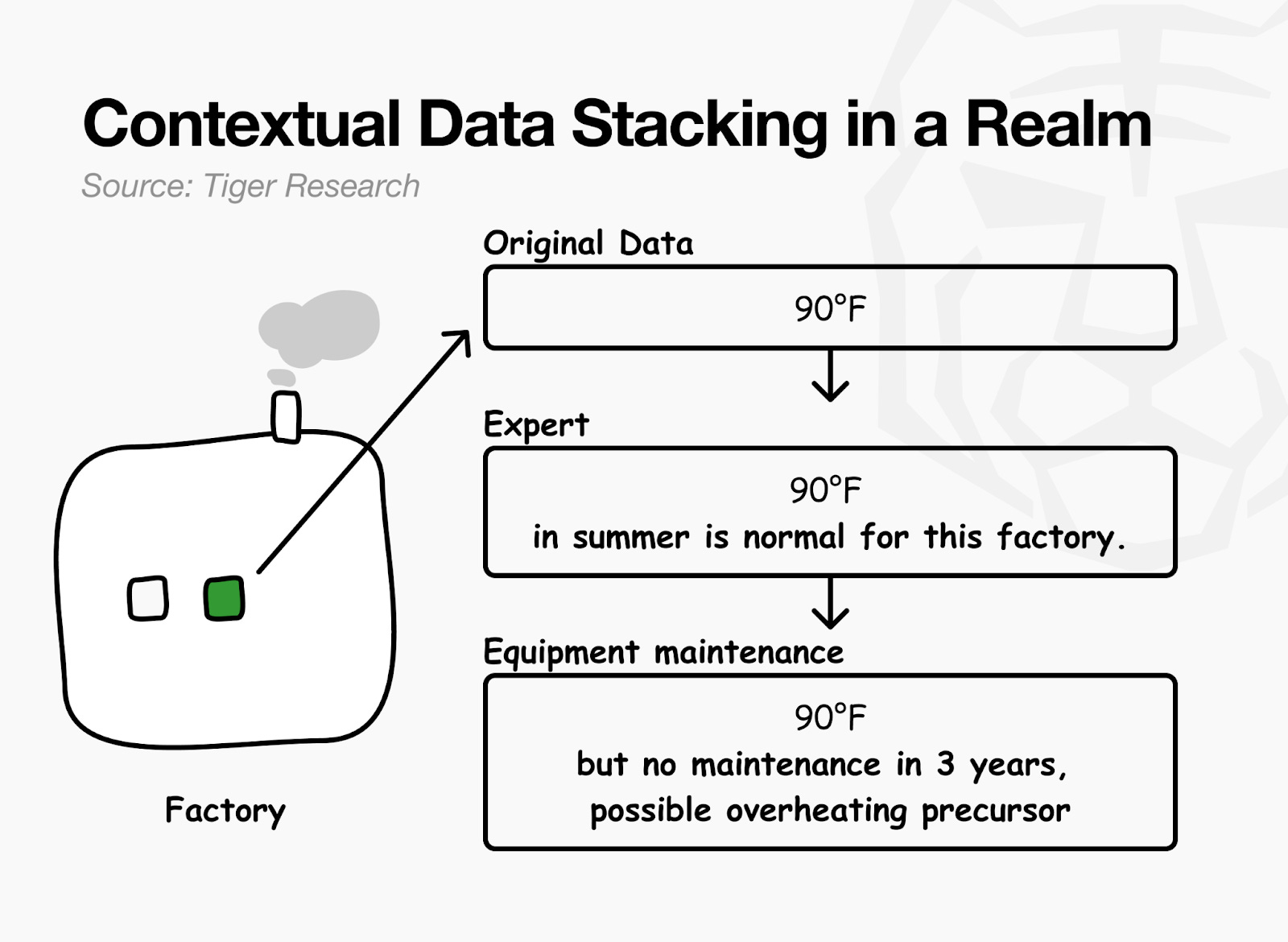
These three data types are not siloed. They stack within a single Realm and reinforce each other.
A sensor sends “90°F.”
Expert tagging adds “90°F in summer is normal for this factory.”
Equipment maintenance records add another layer: “90°F, but no maintenance in 3 years, possible overheating precursor.”
As data layers thicken, the context available to AI deepens.
One caveat. Realms is currently in design and development and has not yet launched.
The scenarios above represent IoTeX’s target vision. Building industry-specific Realms with sufficient data and expert participation to generate meaningful intelligence will require significant time and ecosystem effort.
4. Trio: Real-Time Multimodal AI where the Vision Meets Revenue
Trio is IoTeX’s first direct answer to the question every investor asks: where’s the revenue? Built by MachineFi, IoTeX’s AI subsidiary, Trio is a real-time multimodal intelligence layer for video streams and the first commercial product built on the IoTeX stack.
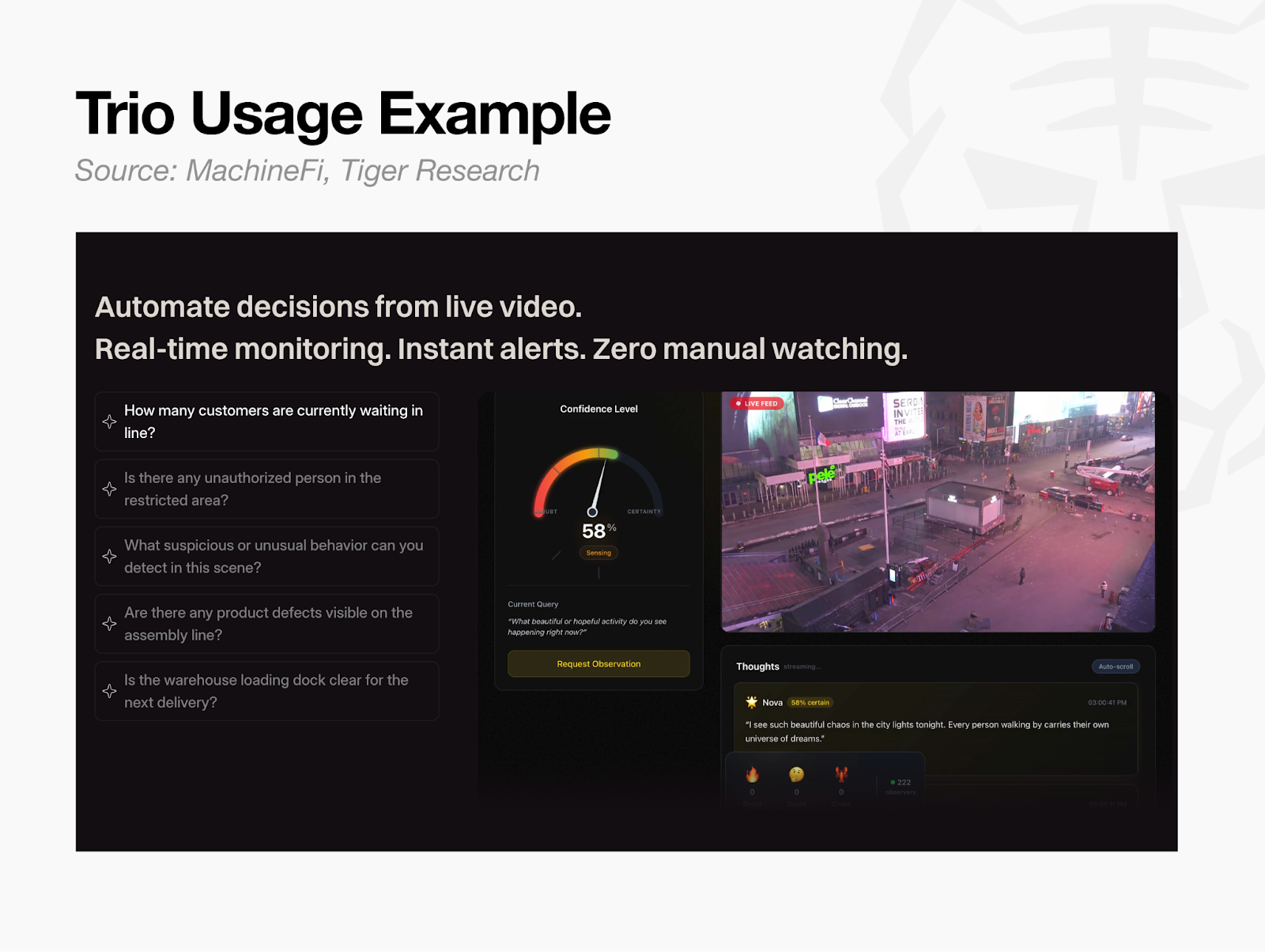
Trio is a multimodal stream agentic product. Connect a live video feed, and AI analyzes what is happening in real time, returning natural language answers. Instead of human CCTV monitoring, users ask questions like “Anyone in the restricted zone?” or “Defects on the assembly line?” and get instant judgments.
Four-step workflow.
Connect: Link streams from YouTube Live, RTSP, and other sources.
Extract: AI models analyze video, audio, and sensor data, interpreting them in natural language.
Fuse: Insights from multiple sources are combined into a comprehensive judgment.
Action: Judgments route through webhooks or AI agent workflows to trigger real-world responses.
The rationale is simple. Sensors cannot be attached to everything, and video analysis offers the fastest deployment path. Existing CCTV cameras in large warehouses can be leveraged immediately.
The cost structure stands out technically.
VLMs typically charge per frame. For security cameras with minimal scene change, analyzing every frame wastes most of the budget. Trio applies motion pre-filtering to discard unchanged frames before AI analysis, reducing VLM API costs by 70 to 90% according to IoTeX. This pre-filtering draws directly from DePIN experience processing high-volume sensor data efficiently.
One caveat. Trio is not directly connected to the IoTeX blockchain today. It does not run on on-chain transactions or the $IOTX token.
It is effectively a standalone AI product built on capabilities from previous DePIN experiences, including real-time data processing, edge computing, and multimodal stream integration. Pricing follows a standard SaaS model with a free Basic tier, a $39/month Pro plan, and custom Enterprise pricing.
Trio’s strategic meaning for IoTeX is clear. Instead of depending solely on blockchain protocol fees, the company aims to generate real revenue through AI products.
Trio also serves as a demonstration that compresses IoTeX’s entire logic into a single product. It takes physical real-world data, processes it through eight years of accumulated DePIN infrastructure, and delivers the output as a commercial product that enterprises are paying for today.
5. What to Watch Going Forward
IoTeX has completed its infrastructure build. The 2026 investment thesis is not about whether the technology works. The L1, ioID, and Quicksilver are all live and growing.
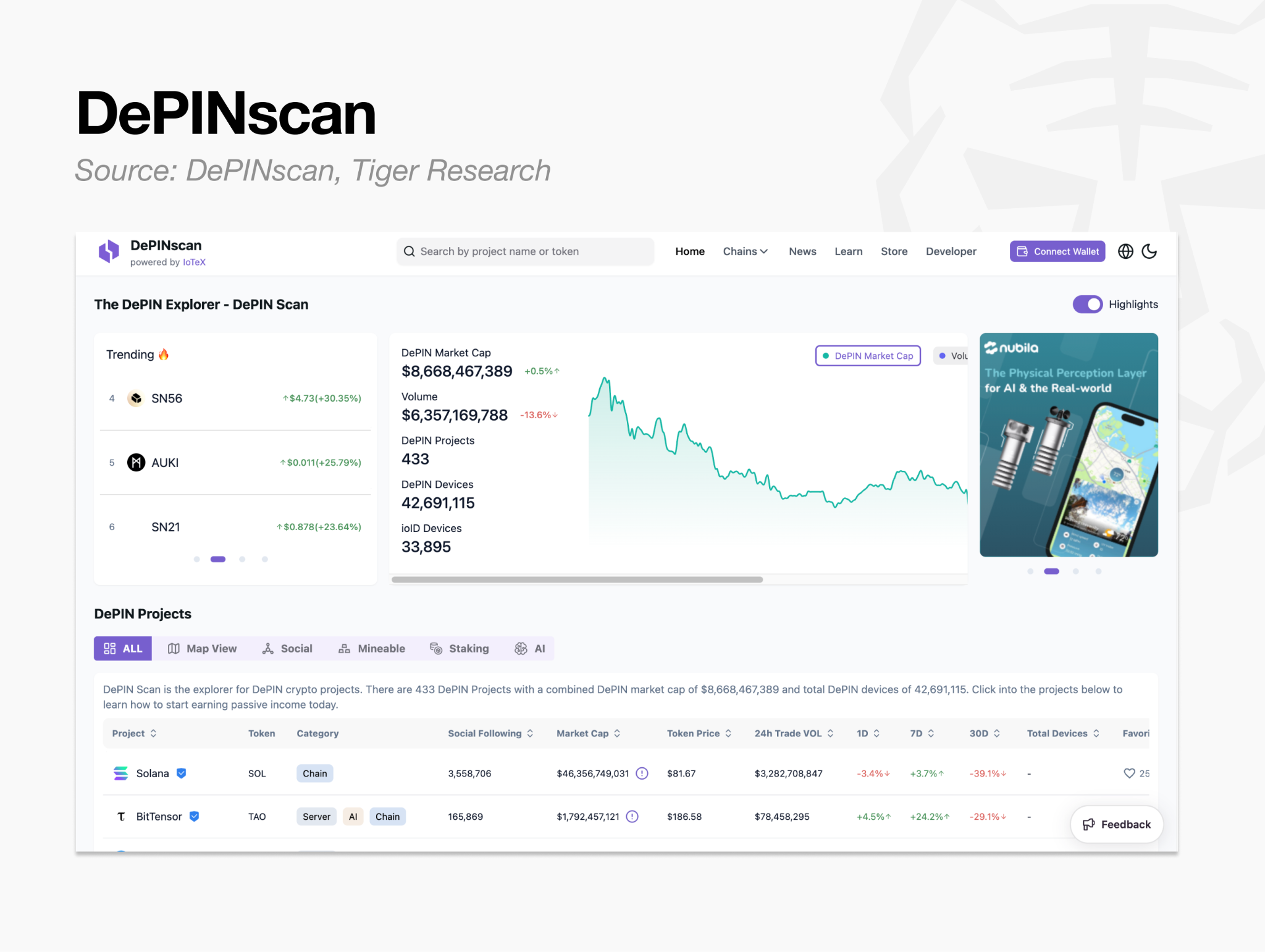
The numbers confirm it. Over 42 million devices are registered across 433 DePIN apps by DePINscan metrics built by IoTeX, on-chain ioID registrations exceeded 33,000 as of January 2026, and the mainnet has run without a single instance of downtime since its 2019 launch. The technology is sufficiently proven.
One question remains: does this technical readiness translate into actual revenue? Two milestones will determine the answer: revenue conversion and ecosystem expansion.
5.1. Revenue Conversion
The problem is clear. Technical capability has not translated into revenue. Middleware is structurally difficult to monetize. It sits between layers, has no direct user touchpoint, and must remain low-cost to drive adoption. IoTeX was no exception.
Trio changes this revenue structure. Rather than remaining a middleware relay, IoTeX has effectively established an AI subsidiary and begun selling SaaS directly to end users. The revenue model has shifted from middleware fees to subscription.
Once subscription revenue reaches scale, a pathway opens to return that value to the $IOTX token ecosystem. Product revenue supports ecosystem value, creating a self-reinforcing cycle.
The risks are real. Trio is still early, and Google Cloud Vision and Amazon Rekognition already dominate the live video analytics market. That said, Trio’s positioning around data sovereignty and 70 to 90 percent cost reduction represents a meaningful differentiator. But enterprise sales cycles are long, and the market judges on results. Proof requires actual contracts, not narrative.
5.2. Ecosystem Expansion
Trio is the product-level pivot. The ecosystem-level move is the Real-World AI Foundry, launched at Token2049 Singapore in September 2025. The Foundry pools infrastructure, data, and compute from multiple companies to co-develop AI models. Vodafone brings telecom infrastructure, Filecoin provides decentralized storage, and IoTeX sits in between as the verification and coordination layer.
The target output is Real-World Models (RWMs). Conventional AI trains on static historical data. RWMs train on live sensor and device feeds, such as factory temperatures, traffic flow, and weather. Contributors who supply data or compute receive usage-based compensation.
The partner list is impressive, but the Foundry is still early-stage. Whether RWMs can reach production-grade performance is unproven. IoTeX’s re-rating as an AI infrastructure company depends on execution across both fronts, Trio on the product side and the Foundry on the ecosystem side.
🐯 More from Tiger Research
Read more reports related to this research.Disclaimer
This report was partially funded by IoTeX. It was independently produced by our researchers using credible sources. The findings, recommendations, and opinions are based on information available at publication time and may change without notice. We disclaim liability for any losses from using this report or its contents and do not warrant its accuracy or completeness. The information may differ from others’ views. This report is for informational purposes only and is not legal, business, investment, or tax advice. References to securities or digital assets are for illustration only, not investment advice or offers. This material is not intended for investors.
Terms of Usage
Tiger Research allows the fair use of its reports. ‘Fair use’ is a principle that broadly permits the use of specific content for public interest purposes, as long as it doesn’t harm the commercial value of the material. If the use aligns with the purpose of fair use, the reports can be utilized without prior permission. However, when citing Tiger Research’s reports, it is mandatory to 1) clearly state ‘Tiger Research’ as the source, 2) include the Tiger Research logo following brand guideline. If the material is to be restructured and published, separate negotiations are required. Unauthorized use of the reports may result in legal action.


