

Gold Has Proven the Model. The Rest Is Next.
The commodity tokenization market grew 4x in one year, from $1.9B in early 2025 to $7.13B in February 2026.
Commodity tokenization preserves rights to physical assets while enabling fractional participation, 24/7 trading, and on-chain transparency. Gold validated the model first, with expansion now underway into energy and agriculture.
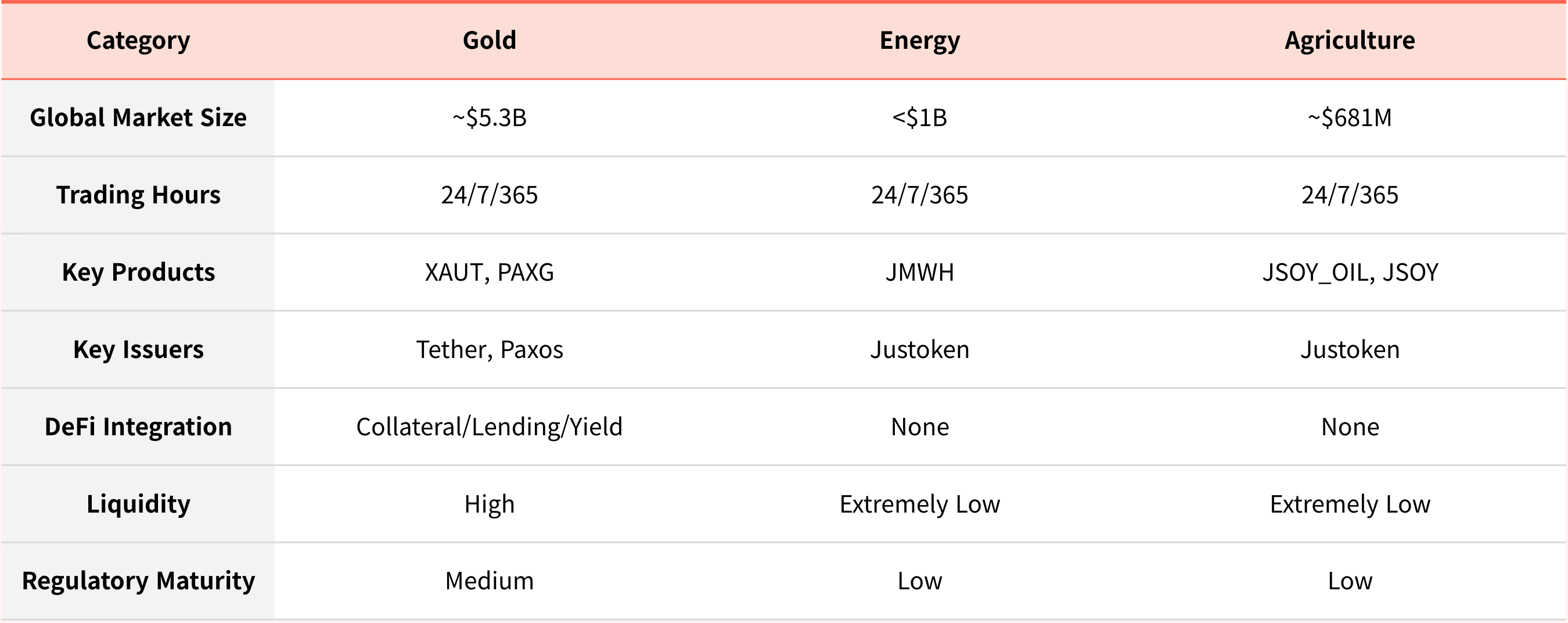
Gold: XAUT ($3.57B) + PAXG ($2.31B) account for 73% of the market. In 2025, tokenized gold traded $178B in volume, surpassing every major gold ETF except GLD and ranking as the world’s second-largest gold investment product by volume
Energy: JMWH ($861M) tokenizes electricity (MWh) but is not listed on any DEX/CEX, limiting retail access and keeping actual trading extremely thin
Agriculture: JSOY_OIL ($300M) introduced a 1 token = 1 ton soybean oil structure, but on-chain activity shows only Mint/Burn with no real trading
Tokenization does not solve everything. Gold still requires offline vault storage, proof-of-reserve does not match TradFi-grade audits, and half of the 39 products remain unregulated. Fragmented global regulation across SEC/CFTC/MiCA, systemic risk from issuer concentration, and thin volume outside gold remain open challenges.
Gold has proven that tokenization works. Energy and agriculture present significant transformation potential given existing inefficiencies in oligopolistic structures, opaque supply chains, and high entry barriers. The shift toward open participation structures is unlikely to reverse, and the pace at which these challenges are resolved will determine the market’s growth ceiling.
Amid the accelerating growth of the RWA market in 2026, commodities are also being tokenized. Please review the current types of tokenized commodities and their issuance mechanisms immediately.
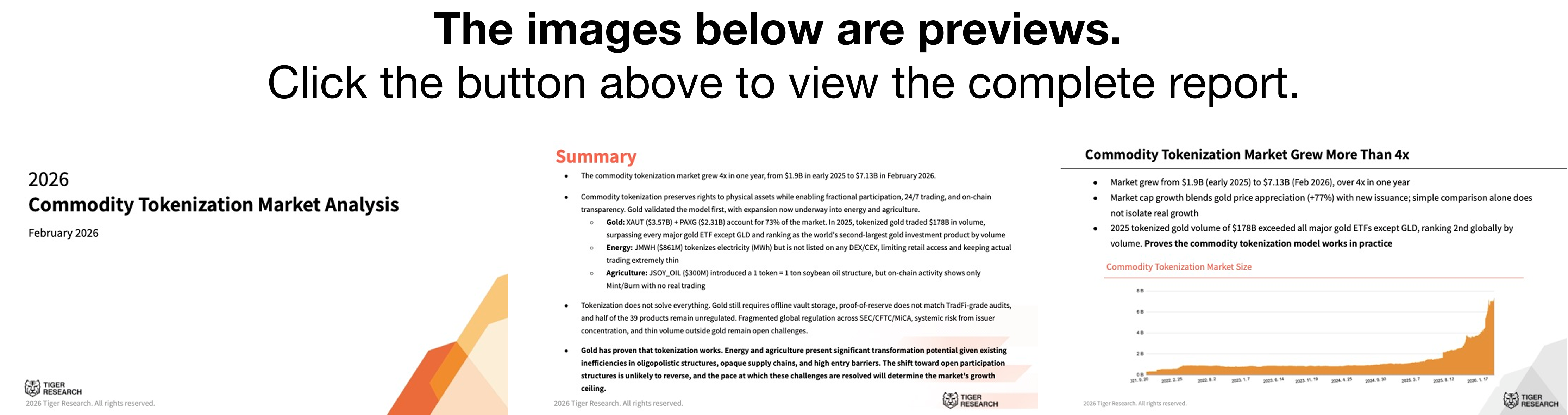
Commodity Tokenization Market Grew More Than 4x
Market grew from $1.9B (early 2025) to $7.13B (Feb 2026), over 4x in one year
Market cap growth blends gold price appreciation (+77%) with new issuance; simple comparison alone does not isolate real growth
2025 tokenized gold volume of $178B exceeded all major gold ETFs except GLD, ranking 2nd globally by volume. Proves the commodity tokenization model works in practice
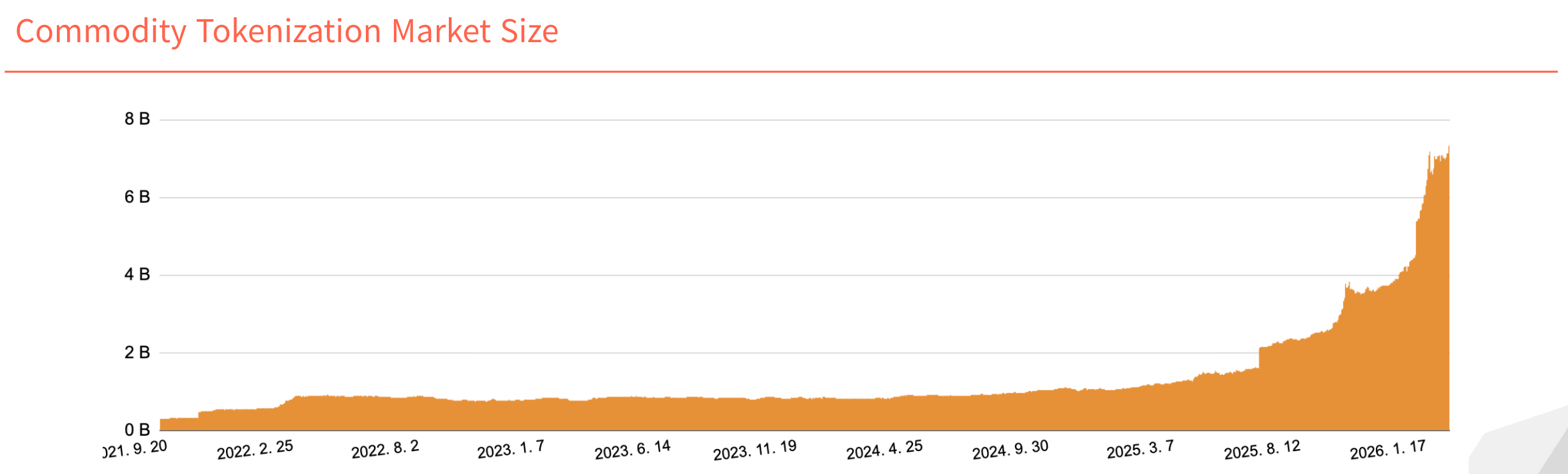
Fast Growth, but 73% Is Gold
15 of 39 products are gold-linked, ~73% ($5.3B) of total market cap
Top 2 gold tokens (XAUT $2.7B, PAXG $2.4B) = 71% of entire RWA token market
Other sectors (energy, agriculture, diamonds) present but negligible in scale; early-stage
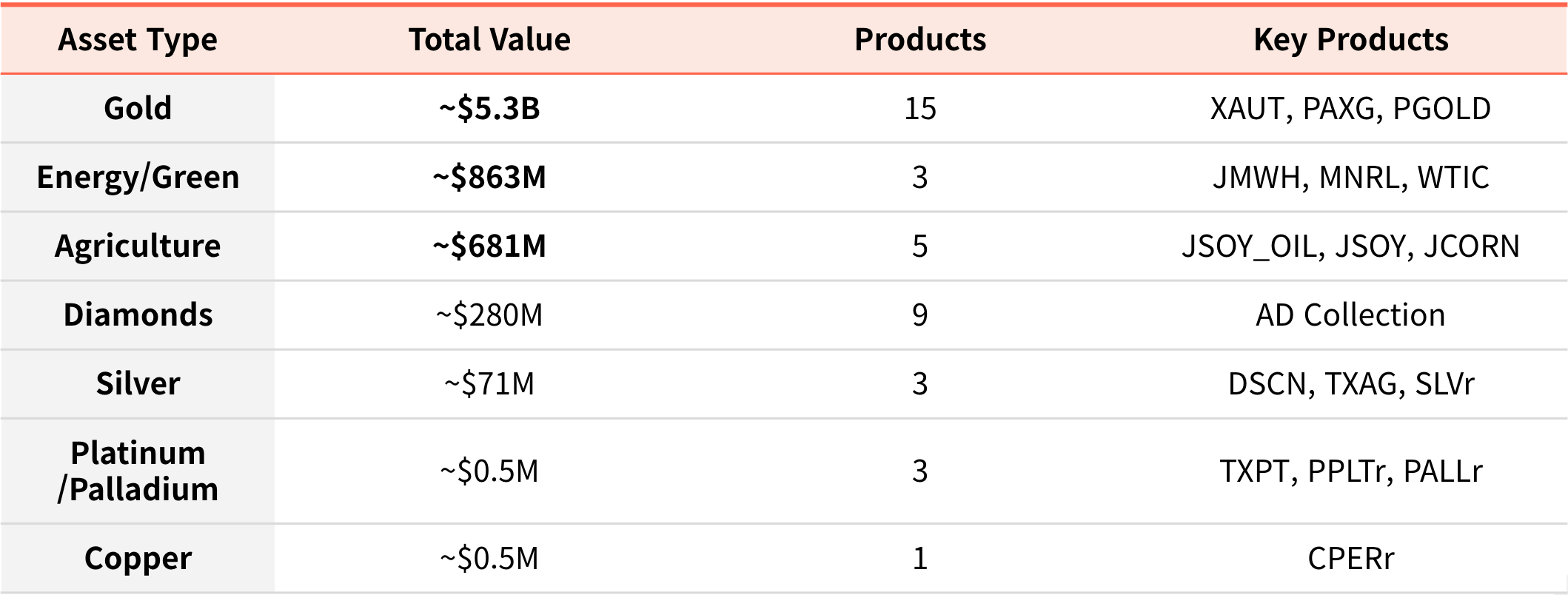
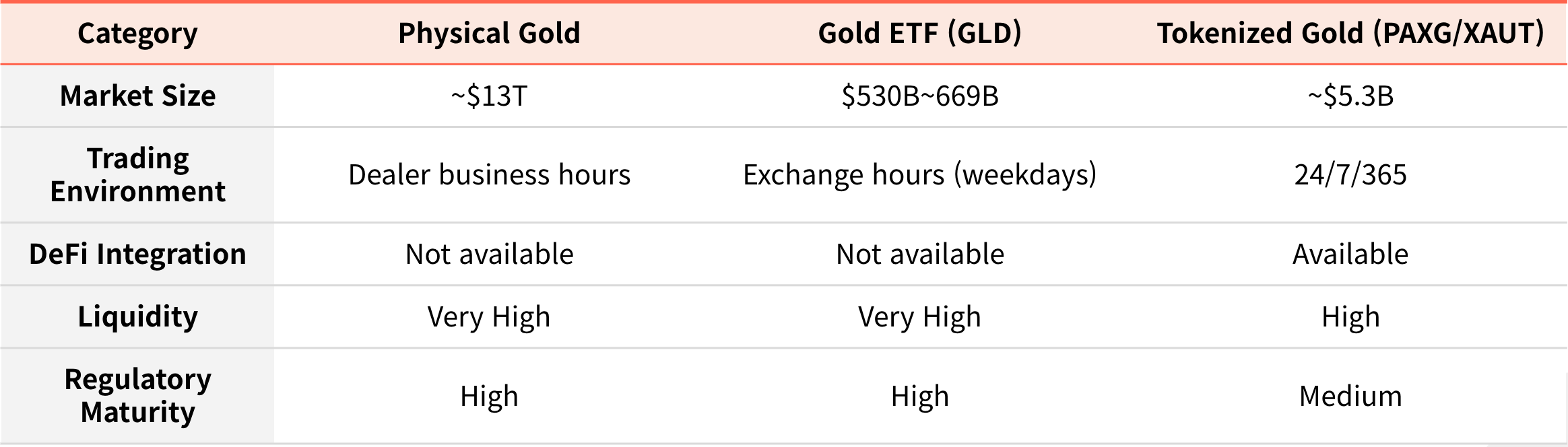
Tokenized Commodity Product Comparison
Tokenized Gold, What Is Different?
Institutional physical gold trading on the London market requires $200M+ minimum. ETFs lowered the barrier but provide only indirect ownership via fund shares. Direct ownership and high accessibility could not coexist
Tokenized gold resolves this by maintaining direct claims on physical bullion while enabling fractional participation, 24/7 trading, and DeFi collateral use
How Is Gold Tokenized?
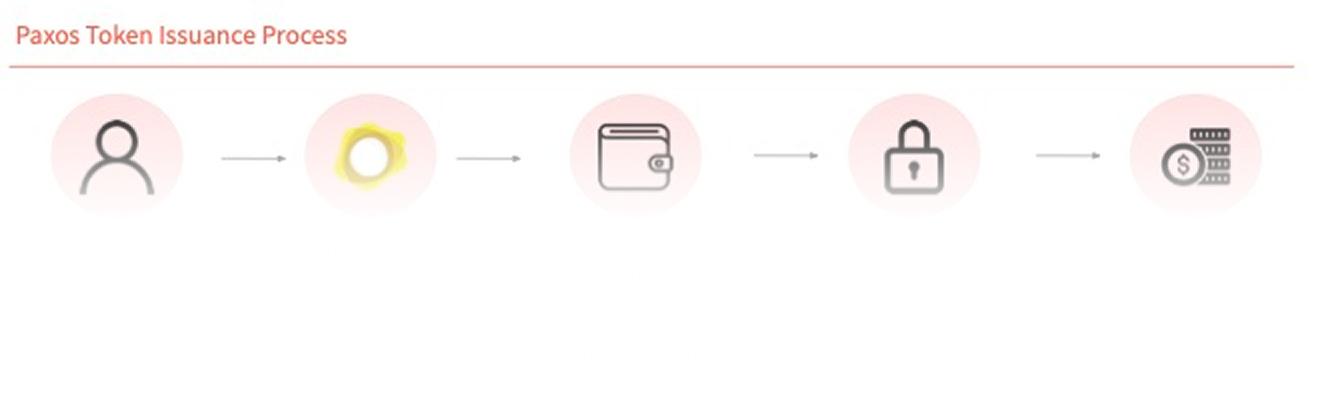
Institutional user remits fiat; Paxos buys LBMA-approved bullion, stores in allocated Brink’s London vault. Tokens minted only after physical gold secured (mint-on-demand)
Redemption reverses the flow. Tokens burned, physical gold or cash returned. Token supply fully pegged to physical gold in/outflows
Issuer buys gold on behalf of user, records transfers digitally within third-party-verified vault
Disclaimer
This report has been prepared based on materials believed to be reliable. However, we do not expressly or impliedly warrant the accuracy, completeness, and suitability of the information. We disclaim any liability for any losses arising from the use of this report or its contents. The conclusions and recommendations in this report are based on information available at the time of preparation and are subject to change without notice. All projects, estimates, forecasts, objectives, opinions, and views expressed in this report are subject to change without notice and may differ from or be contrary to the opinions of others or other organizations.
This document is for informational purposes only and should not be considered legal, business, investment, or tax advice. Any references to securities or digital assets are for illustrative purposes only and do not constitute an investment recommendation or an offer to provide investment advisory services. This material is not directed at investors or potential investors.
Terms of Usage
Tiger Research allows the fair use of its reports. ‘Fair use’ is a principle that broadly permits the use of specific content for public interest purposes, as long as it doesn’t harm the commercial value of the material. If the use aligns with the purpose of fair use, the reports can be utilized without prior permission. However, when citing Tiger Research’s reports, it is mandatory to 1) clearly state ‘Tiger Research’ as the source, 2) include the Tiger Research logo. If the material is to be restructured and published, separate negotiations are required. Unauthorized use of the reports may result in legal action.


