

Crypto exchanges are expanding into traditional assets through perpetual futures. Korean stock-linked perpetual futures have already reached KRW 307 trillion in trading volume within months. This report looks at the rise of offshore liquidity and what Korea needs to participate in this market.
Key Takeaways
Crypto exchanges are rapidly expanding into stocks, commodities, and other traditional assets through perpetual futures.
Korean stock-linked perpetual futures reached KRW 307 trillion in trading volume within months, increasing the importance of offshore markets.
Korea needs corporate access to domestic crypto exchanges, a formal derivatives framework, and KRW stablecoin infrastructure.
1. Crypto Exchanges Are Expanding into Traditional Markets
Crypto exchanges are expanding beyond digital assets and into traditional markets. Bitcoin and Ethereum once dominated trading on these platforms. Today, exchanges are rapidly adding products linked to stocks, commodities, and other traditional assets.
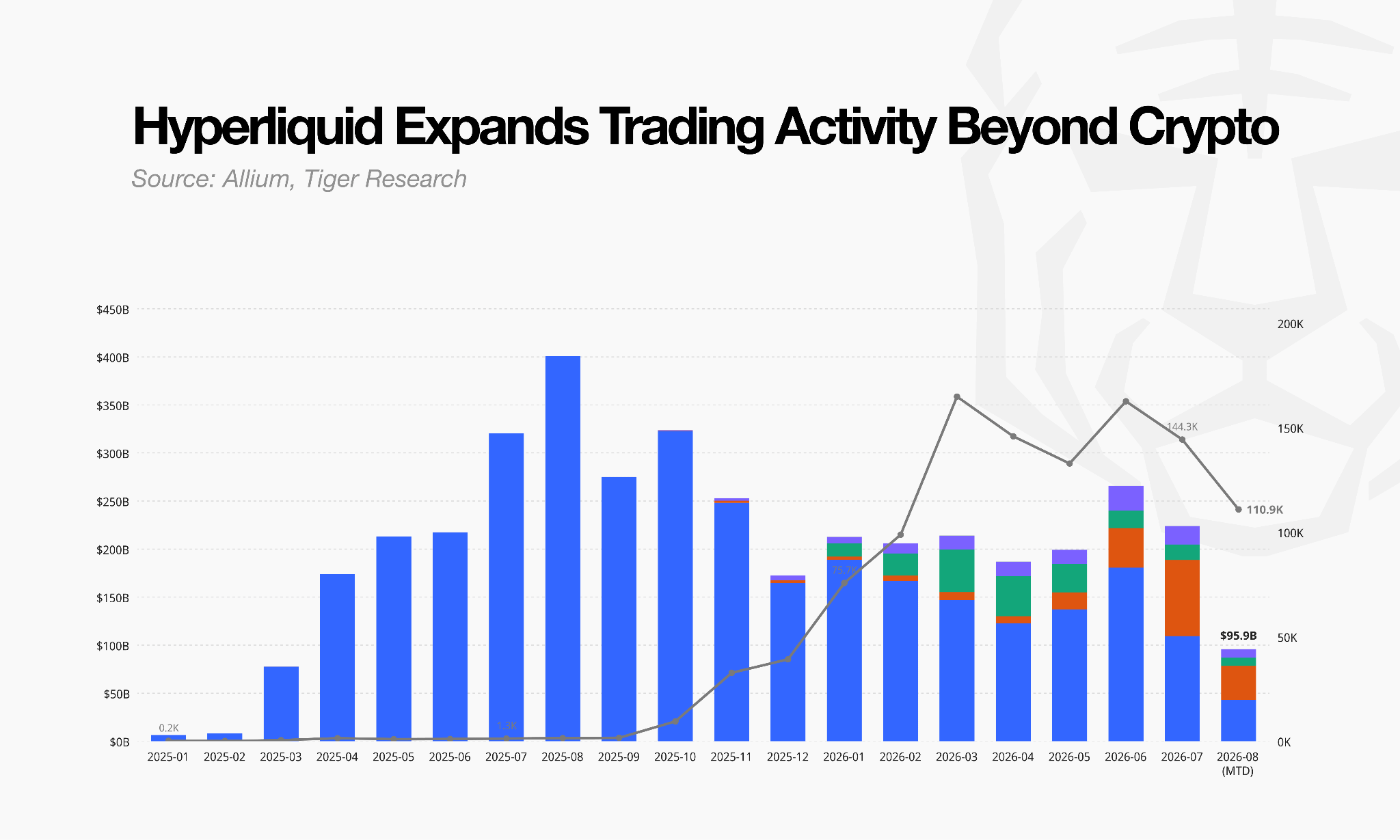
Hyperliquid, a leading decentralized exchange, has seen a growing share of trading in traditional asset-linked products in 2026. More users are also trading these products. Infrastructure originally built for crypto is now emerging as a new venue for traditional financial markets.
Perpetual futures are driving this shift. These derivatives let investors gain exposure to price movements without owning the underlying asset. Unlike traditional futures, they have no expiration date and do not require physical delivery.
This structure allows exchanges to launch products linked to stocks and commodities with relative ease. It also gives crypto exchanges a practical way to expand beyond digital assets and into traditional markets.
2. Korea Is No Exception: Korean Stock Trading Moves Offshore
Korea is already at the center of this shift. Offshore crypto exchanges actively trade perpetual futures linked to major Korean stocks such as Samsung Electronics and SK hynix. These products trade at night and on weekends. They also offer high leverage. As a result, they give both Korean and global investors a new way to gain exposure to Korean stocks. An offshore market is rapidly emerging where investors can trade Korean stock price movements regardless of domestic market hours.
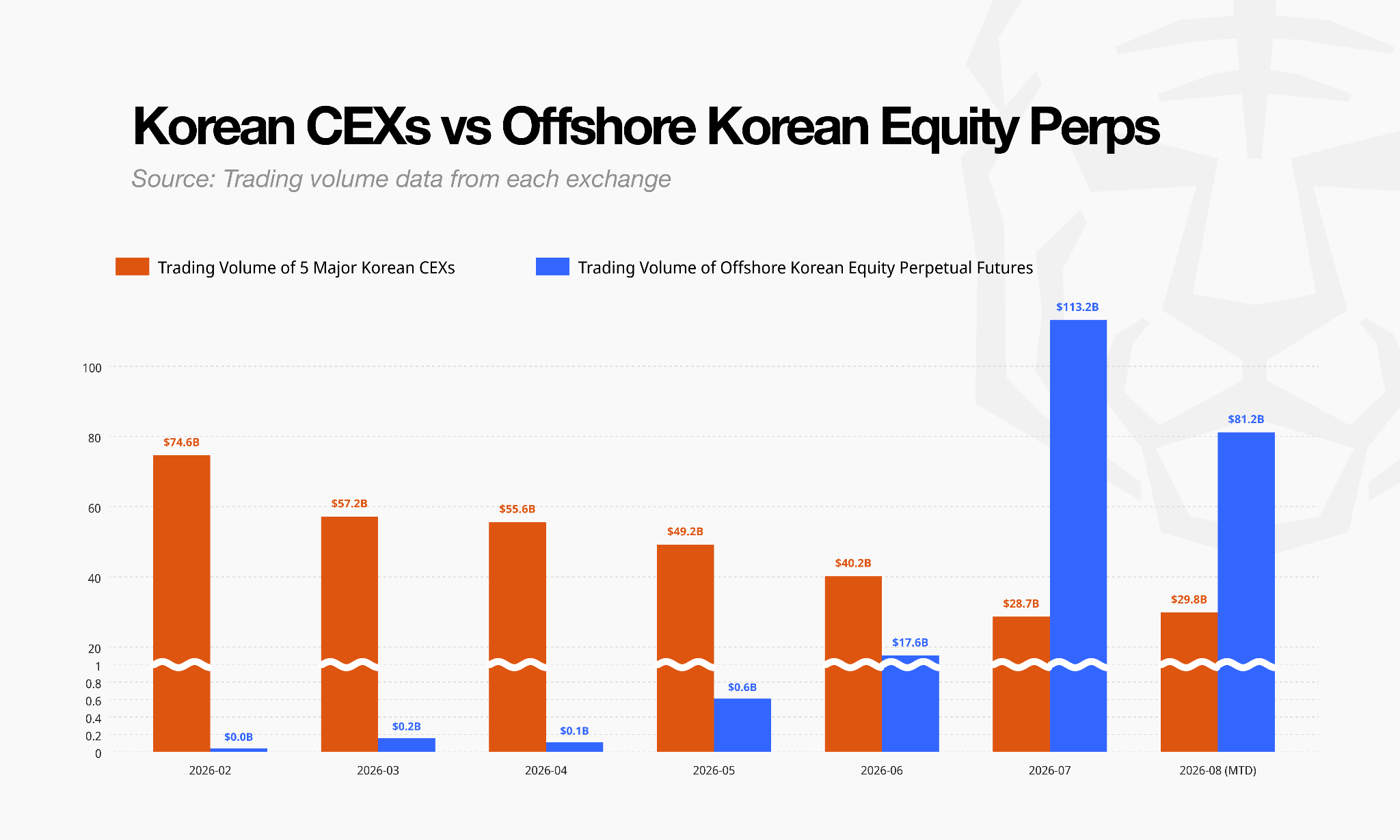
The market is growing rapidly. From February through August 2026, cumulative trading volume in perpetual futures linked to Korean stocks reached about KRW 307 trillion. In August alone, trading volume reached KRW 166 trillion. This was nearly four times the KRW 42 trillion traded on Korea’s five largest crypto exchanges over the same period. In just a few months, offshore perpetual futures linked to Korean stocks have grown to a scale that exceeds Korea’s major domestic crypto market.
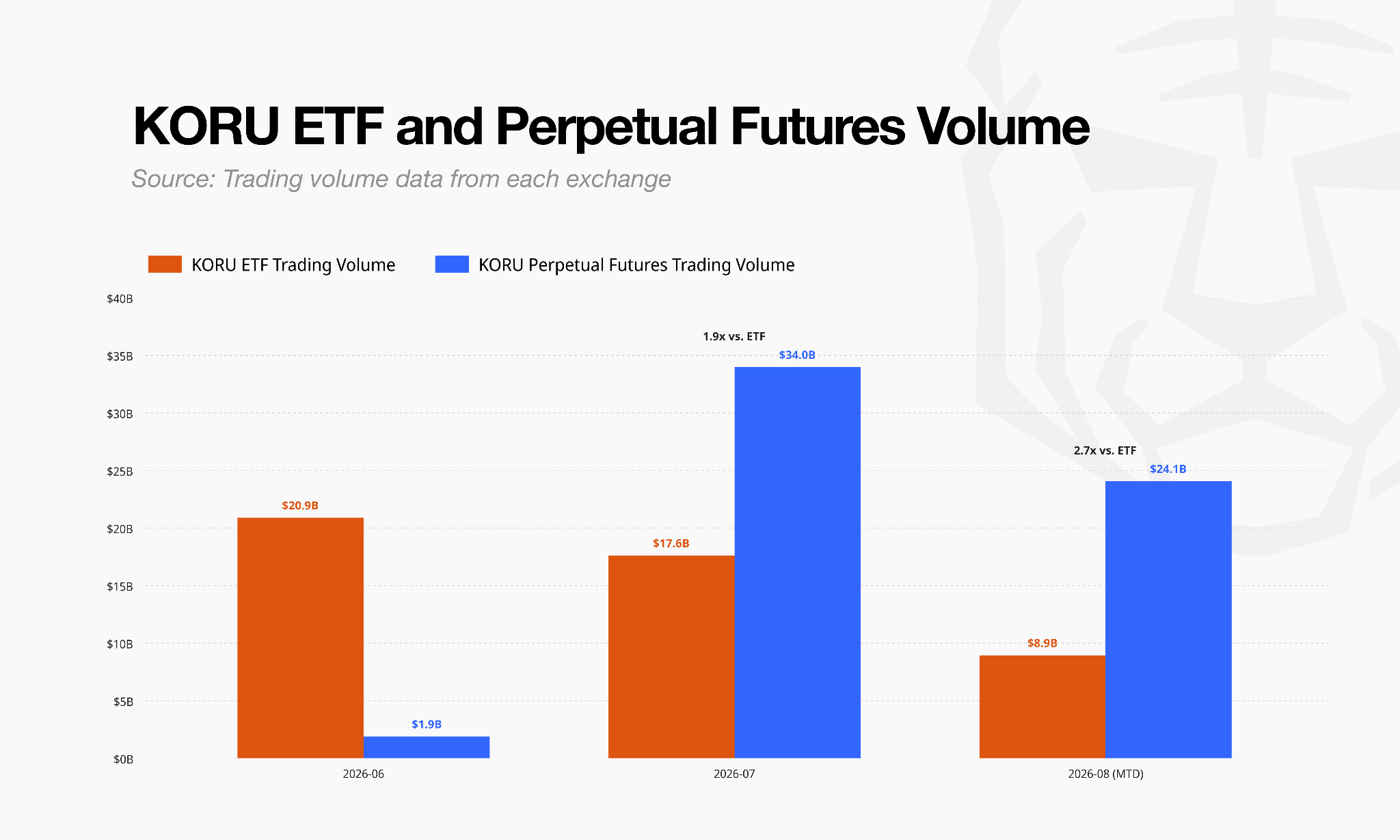
For some products, perpetual futures trading already far exceeds trading in the underlying ETF. In August 2026, perpetual futures linked to KORU, a U.S.-listed 3x leveraged Korea ETF, recorded about USD 24.1 billion in trading volume. KORU ETF itself recorded USD 8.9 billion. The perpetual futures volume was about 2.7 times that of the ETF. More trading took place in the derivative than in the ETF itself. If derivatives trading exceeds the underlying market, offshore venues could play a larger role in price discovery.
More importantly, offshore derivatives markets can also affect the spot market. Market makers that provide liquidity for perpetual futures hedge their exposure by buying and selling related stocks or ETFs. Higher derivatives volume can increase these hedging trades. Sharp price moves can also increase them. These flows can then affect prices in the spot market.
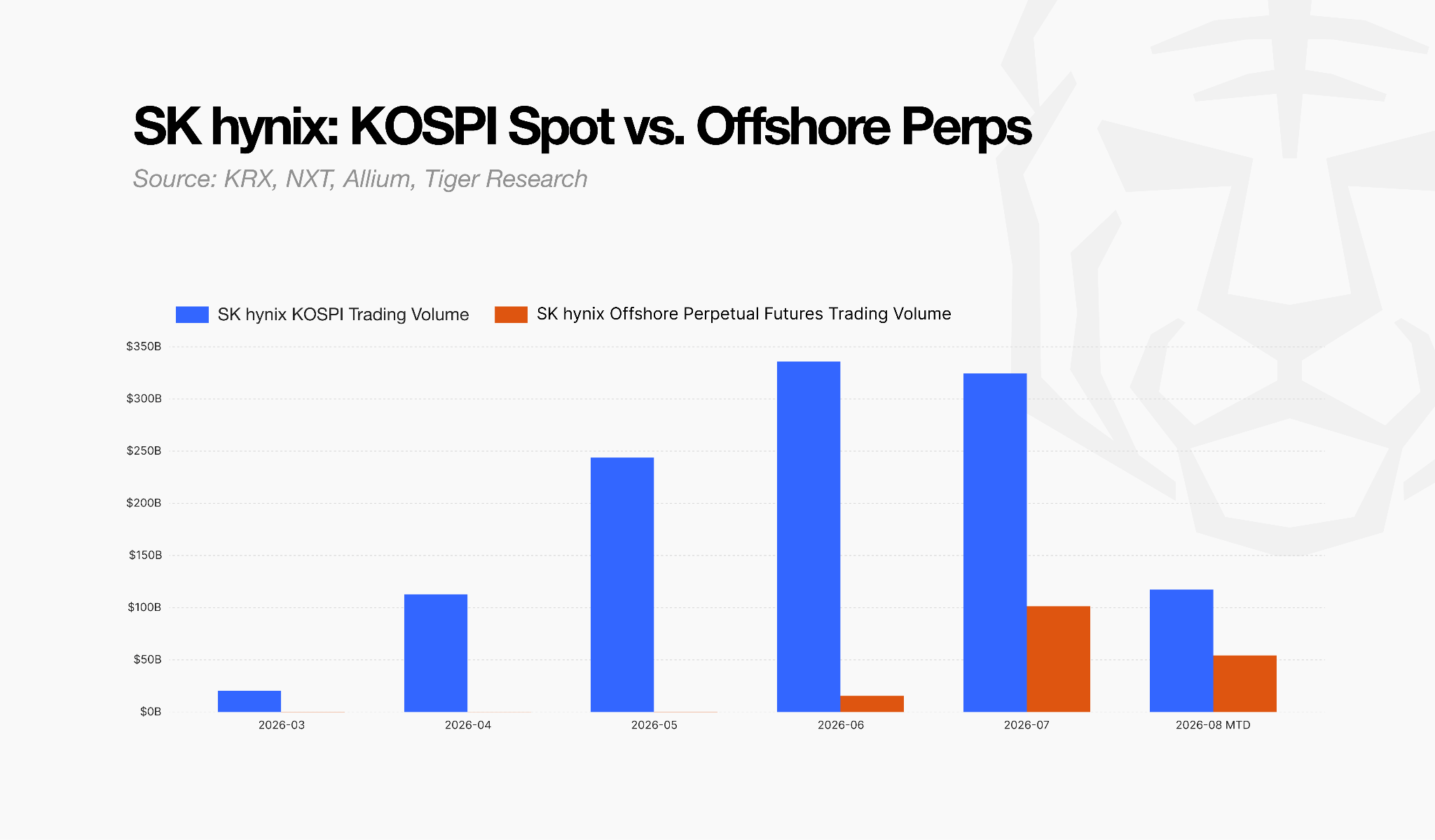
This structure can create a “tail-wags-the-dog” effect, where derivatives drive spot prices rather than simply follow them. The impact may remain limited for large-cap stocks such as SK hynix because spot trading volume is still much larger. However, the gap between derivatives and spot trading volumes is narrowing quickly. This trend warrants close attention.
3. Liquidity Shifts Offshore as Global Markets Evolve
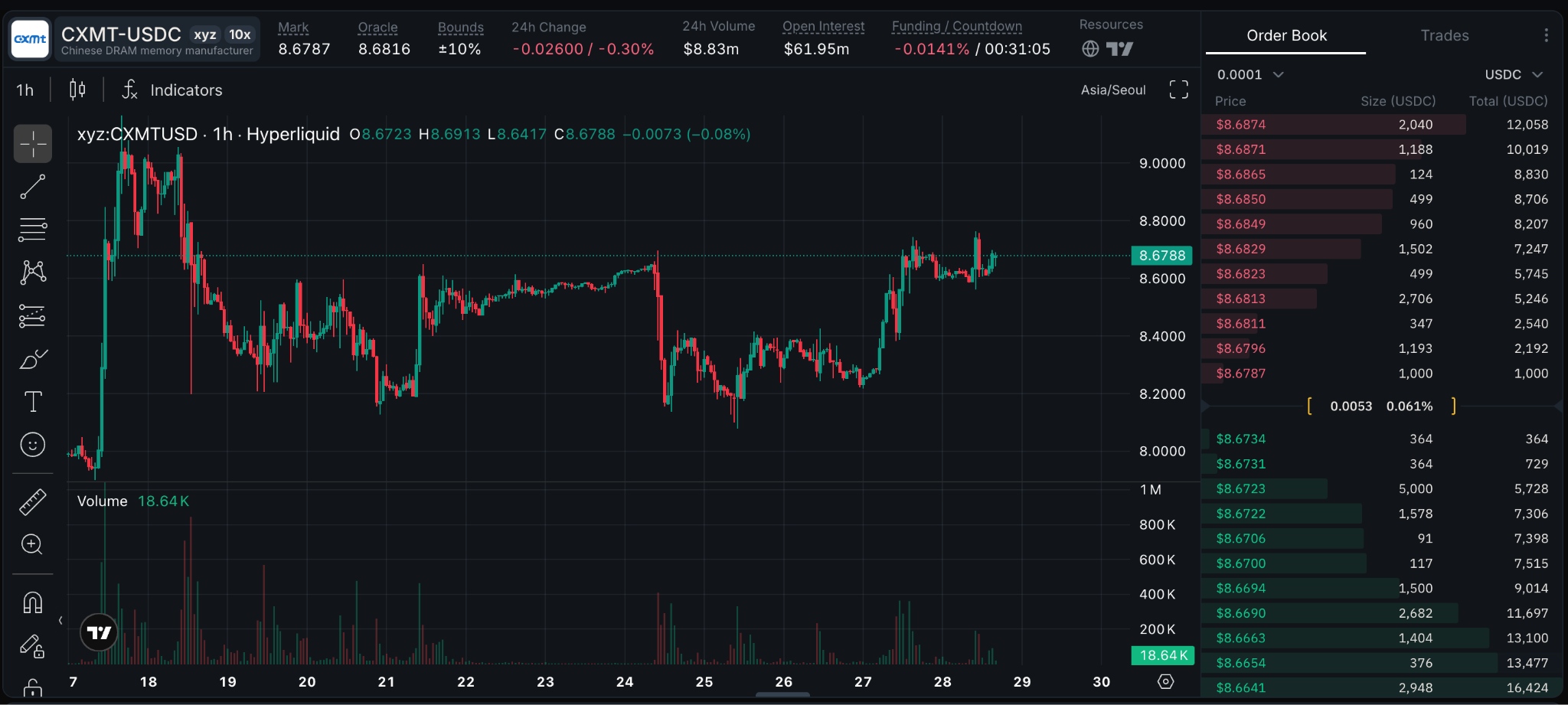
Offshore trading in Korean stocks is not unique to Korea. Perpetual futures are rapidly expanding across stocks and indices in markets such as Korea, Japan, and China. Their reach now extends beyond listed securities. Offshore venues already offer perpetual futures linked to private companies such as Anthropic. They also offer products linked to Chinese memory chipmaker CXMT ahead of its stock market debut. Assets that were once difficult to trade through traditional securities markets are now entering the perpetual futures market. This is rapidly blurring the traditional boundaries of what investors can trade.
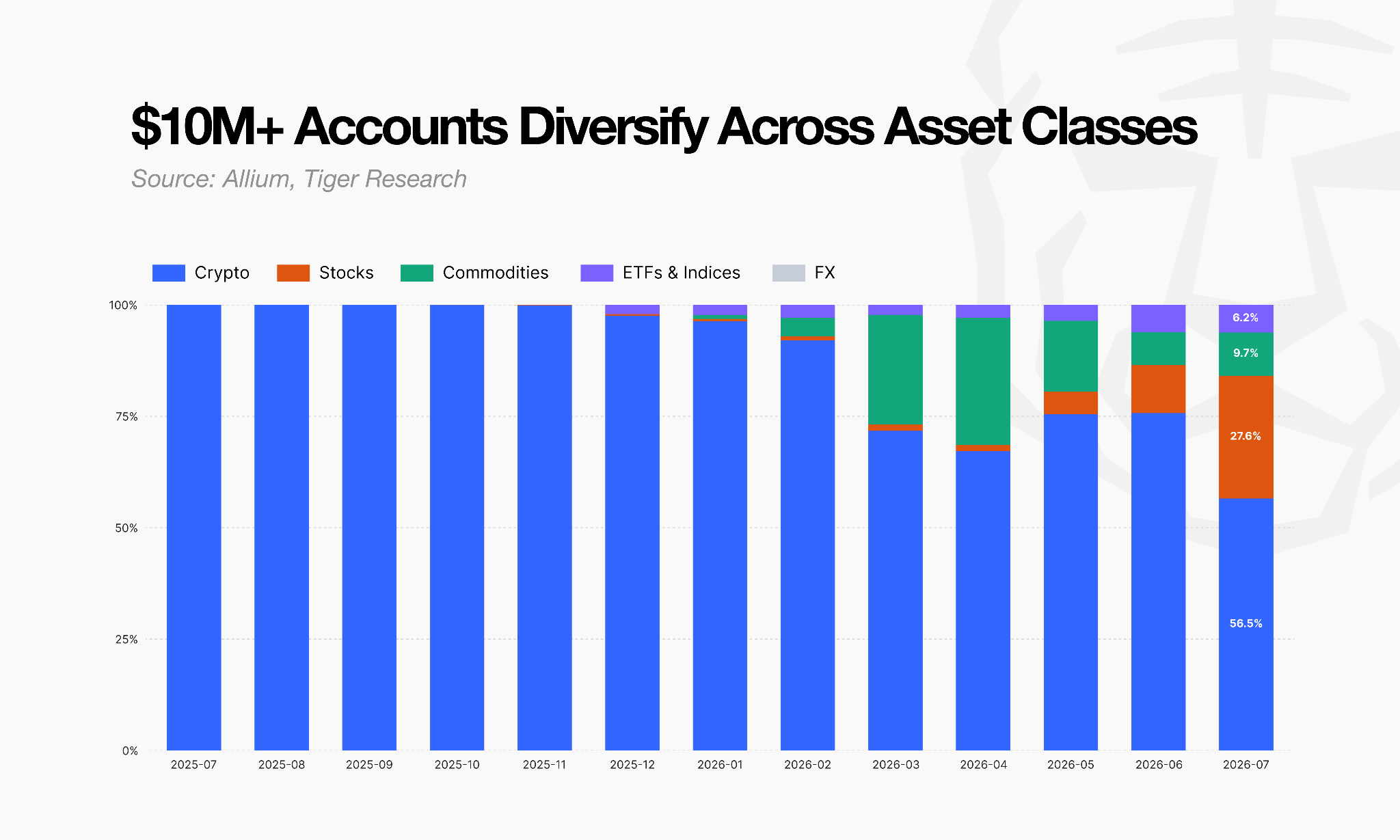
The participants in this market are changing too. Among Hyperliquid accounts with more than USD 10 million in assets, the share that trades traditional assets such as stocks and commodities has risen rapidly. The Wall Street Journal (WSJ) has also reported that professional Wall Street traders use perpetual futures after regular market hours and on weekends. A market that once centered on crypto investors now attracts professional traders and investors that manage large pools of capital.
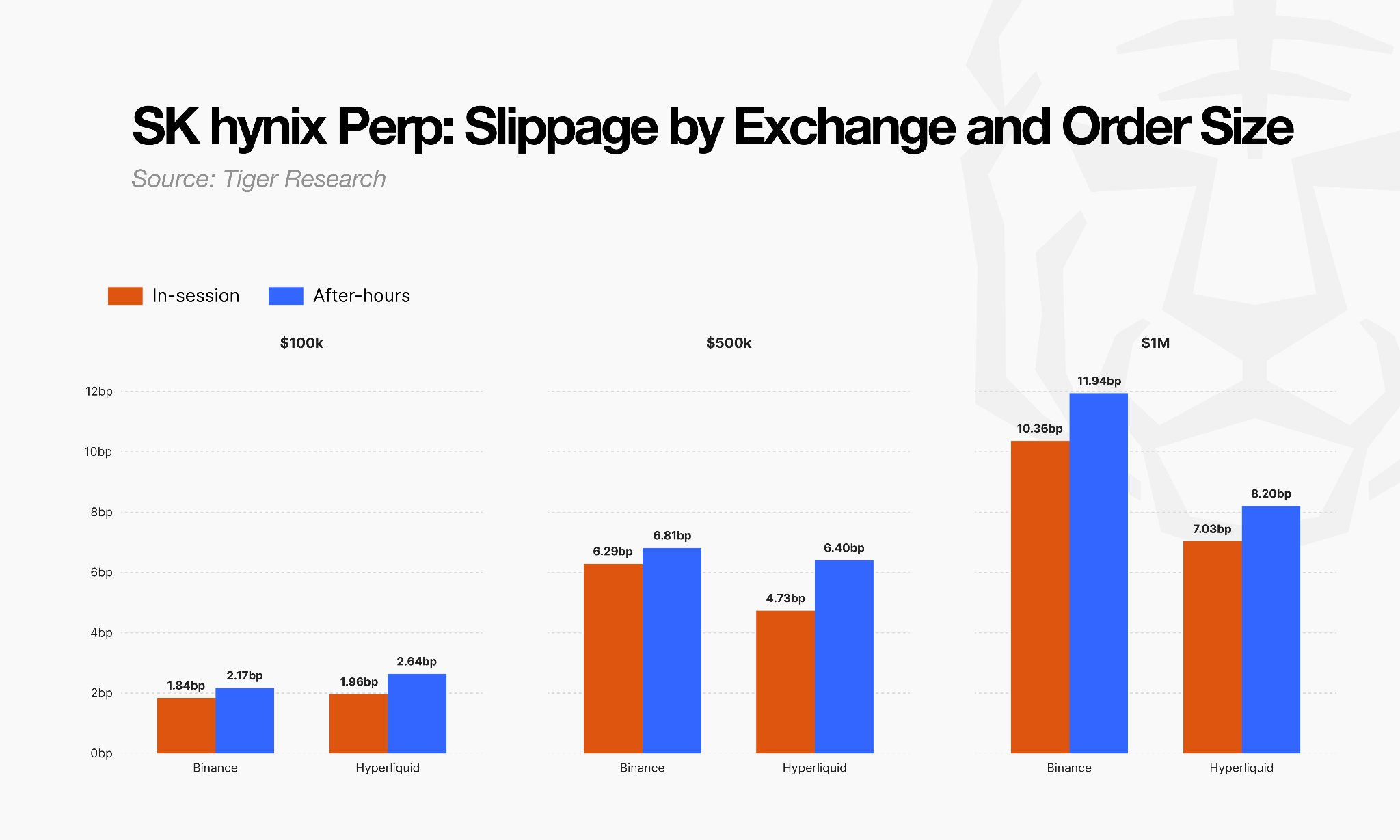
Liquidity in the perpetual futures market also deserves attention. Based on the latest 15-day average, a USD 1 million trade in SK hynix perpetual futures results in only single-digit basis-point slippage. Slippage remains relatively low even outside regular market hours. This means the market has enough depth to absorb large orders even when the Korean stock market is closed. Perpetual futures are moving beyond simply extending traditional market hours. They are becoming markets with liquidity of their own.
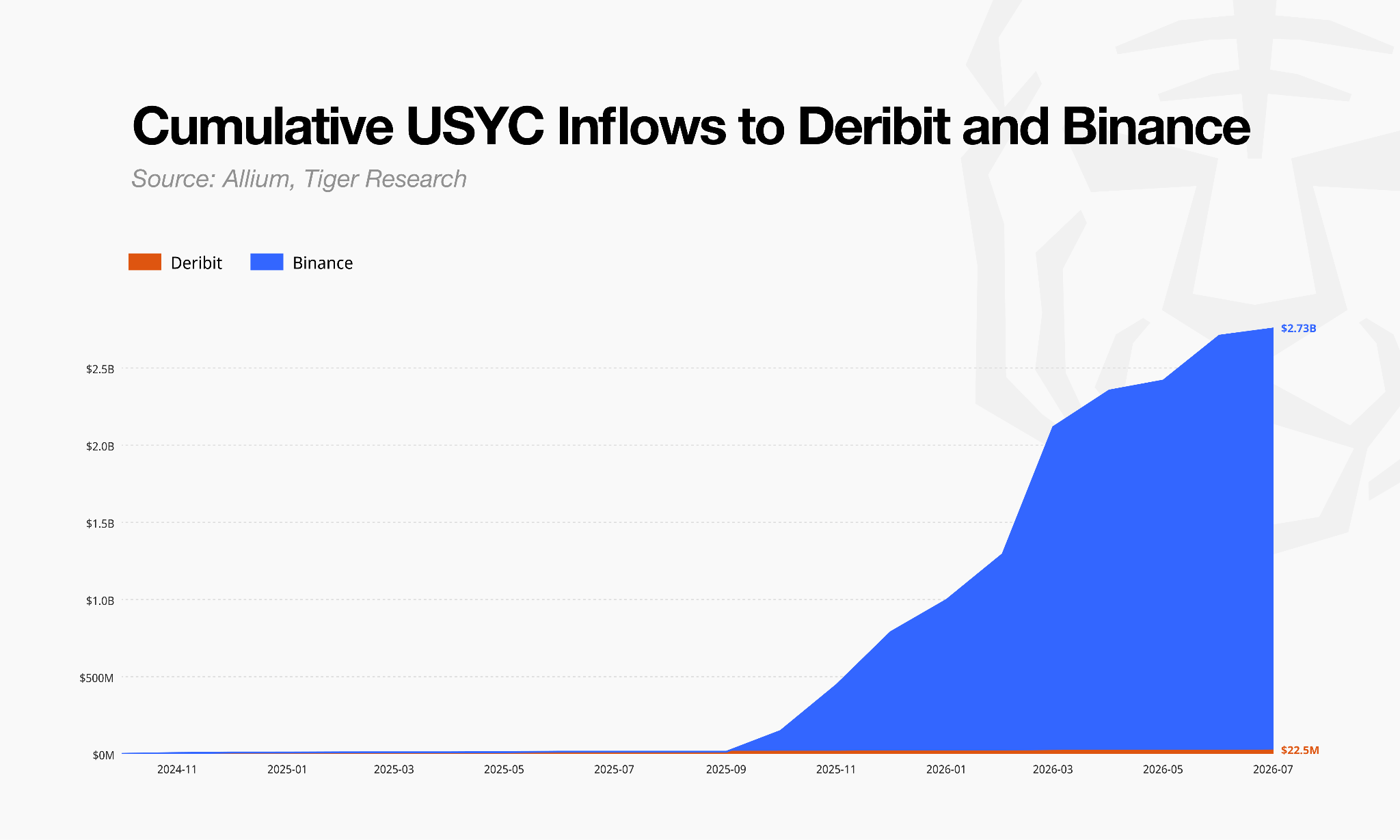
The capital used for trading is changing as well. Some global exchanges now accept tokenized U.S. Treasury assets as collateral. These include BlackRock’s BUIDL and Hashnote’s USYC. Over the past year, cumulative transfers of USYC to exchanges reached about USD 2.75 billion. Not all of this amount served as derivatives margin. Still, institutions can hold familiar U.S. Treasury-backed assets and use them as trading collateral when needed. Traditional financial assets now serve as collateral in these new markets. This creates a new channel for capital to move between traditional finance and the new trading market.
What we are seeing is more than crypto markets expanding into traditional assets. An offshore market that offers exposure to Korean stock prices is growing rapidly without going through the Korean won, domestic brokerages, or Korean exchanges. Tokenized U.S. Treasuries serve as collateral in this market. Professional traders and investors that manage large pools of capital also participate. The shift now extends beyond the assets being traded. The market participants and the capital they use are changing as well.
Korean stock-linked perpetual futures recorded KRW 307 trillion in trading volume in just a few months. That figure shows how quickly this shift is unfolding. But KRW 307 trillion does not represent the size of a mature market. It reflects the current scale of a market that is still taking shape. If more assets become tradable and institutional capital enters at scale, offshore liquidity could grow further. This could reshape market structures that have long been divided by national borders and trading hours. It could also change how capital moves across markets.
4. Offshore Markets Grow: What Role Can Korea’s Financial Industry Play?
Korea can restrict Korean investors from trading these products, but it cannot easily stop offshore markets from growing. Some global exchanges, including Binance, restrict perpetual futures trading for users identified as Korean through KYC. But Korean stock-linked markets can continue to grow through overseas investors and global capital. In practice, Korean regulation limits the participation of Korean investors and financial institutions more than the offshore market itself. Even if Korea restricts local demand, trading and liquidity can still develop overseas.
Korea therefore needs to look beyond simply blocking this trend. It should also turn the growth of these new markets into an opportunity for its financial industry. Korea already has a starting point: its crypto exchanges. They cannot launch stock-linked perpetual futures right away. But they have experience operating 24-hour digital asset markets and already have a large user base. These strengths could support expansion into new markets. Global crypto exchanges are rapidly expanding into traditional assets. Korea should also review the rules and market structure needed to support this shift.
Trading infrastructure alone is not enough. Korea also needs corporate access to the market, a regulatory framework for derivatives, and KRW-based payment and settlement infrastructure. Corporate accounts would bring in professional capital for market making, hedging, and arbitrage. They would also add liquidity. A formal framework for derivatives such as perpetual futures would support products linked to a wider range of assets. KRW-based payment and settlement tools, such as a KRW stablecoin, could improve access for overseas investors and ease capital flows. These are not separate regulatory issues. They are all necessary for the market to function.
Korea should build a framework that allows these elements to work together rather than address them one by one. This would allow Korean crypto exchanges to move beyond crypto trading and connect a wider range of assets with global liquidity. Trading linked to Korean assets is already growing rapidly offshore. The challenge is not simply to stop that growth. What matters more is how large a role Korea’s financial industry can play in this market.
🐯 More from Tiger Research
Read more reports related to this research.Disclaimer
This report has been prepared based on materials believed to be reliable. However, we do not expressly or impliedly warrant the accuracy, completeness, and suitability of the information. We disclaim any liability for any losses arising from the use of this report or its contents. The conclusions and recommendations in this report are based on information available at the time of preparation and are subject to change without notice. All projects, estimates, forecasts, objectives, opinions, and views expressed in this report are subject to change without notice and may differ from or be contrary to the opinions of others or other organizations.
This document is for informational purposes only and should not be considered legal, business, investment, or tax advice. Any references to securities or digital assets are for illustrative purposes only and do not constitute an investment recommendation or an offer to provide investment advisory services. This material is not directed at investors or potential investors.
Terms of Usage
Tiger Research allows the fair use of its reports. ‘Fair use’ is a principle that broadly permits the use of specific content for public interest purposes, as long as it doesn’t harm the commercial value of the material. If the use aligns with the purpose of fair use, the reports can be utilized without prior permission. However, when citing Tiger Research’s reports, it is mandatory to 1) clearly state ‘Tiger Research’ as the source, 2) include the Tiger Research logo. If the material is to be restructured and published, separate negotiations are required. Unauthorized use of the reports may result in legal action.


